
Brand Activation Visual Design: Fabrication, Effects, and Social Impact
Color, scale, and interactive elements determine whether a brand activation generates social content and brand recall or gets ignored. Projection mapping, custom fabrication, and digital displays turn physical spaces into brand environments that audiences engage with and document. This is the production side of experiential marketing: the decisions that make activations work in the real world.
How Visual Design Shapes Brand Activations
Every color choice, structural element, and spatial layout must support campaign goals while competing for attention in busy environments. Activations start with a defined audience, clear objectives, and design choices adapted to the specific venue and context.
Making Activations Stand Out
Oversized installations, color applications, and interactive elements disrupt visual spaces in high-traffic settings where multiple brands compete for the same consumer. Custom fabrication and dimensional installations create a physical presence, while lighting conditions affect visibility at different times of day and across different venue types.
Production Capabilities
Turning design concepts into physical brand experiences requires coordinated production across multiple disciplines:
- Custom Fabrication: Dimensional brand elements, oversized props, and structural installations that serve as activation centerpieces and photo opportunities.
- 3D Printing: Brand elements, packaging inserts, and prototype components built for precision and personalization.
- Woodworking: Display fixtures, furniture, and architectural elements that define brand environments.
- Decorating Services: Laser etching, embossing, and stamping applied to products and packaging.
- Digital Integration: Interactive screens, projection mapping, and QR code systems that connect physical activations to digital brand extensions.
Custom Fabrication for Live Events and Mobile Tours
In-house laser etching, 3D printing, and woodworking produce branded components, signage systems, and display elements across live events and mobile tours. In-house production allows precise brand and quality control across all visual components without relying on outside vendors for fabrication.
Mobile Tour Vehicle Graphics and Branding
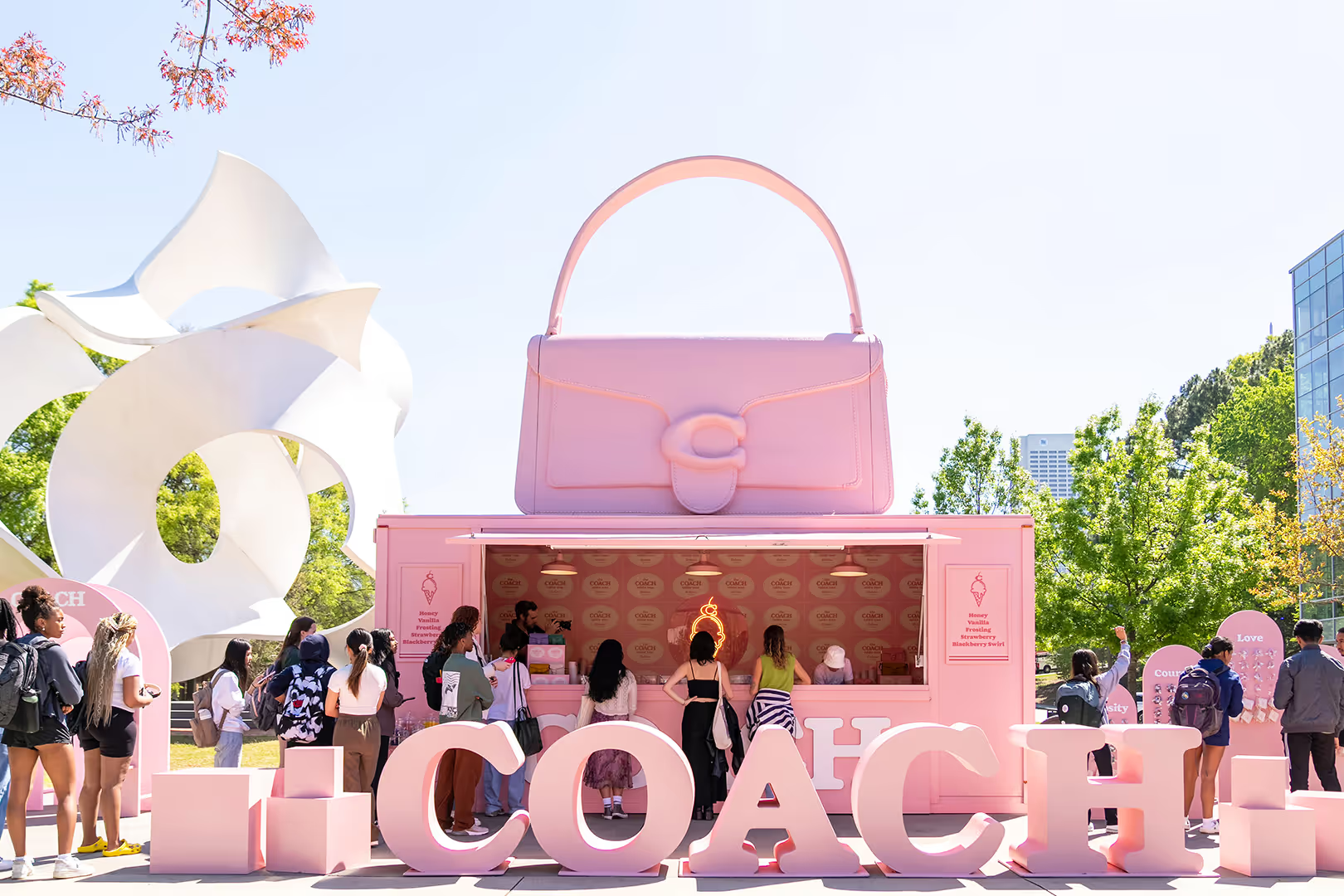
The Coach Tabby Tour used a custom-wrapped shipping container, topped with an oversized Tabby purse, as its primary visual anchor. A monochromatic dimensional arch displayed Coach Tabby bags for direct product interaction, and interior components were built to support sampling and brand ambassador activities throughout each tour stop:
- Vehicle Wraps and Graphics: Full exterior branding incorporating brand colors, logos, and messaging.
- Exterior Display Systems: Custom-fabricated elements that provide branded touchpoints for audience interaction.
- Interior Branded Components: Displays, storage systems, and presentation elements that create cohesive brand experiences inside tour vehicles.
- Transportation-Ready Construction: Fabrication engineered to withstand transit conditions during extended tour periods.
Live Event Displays
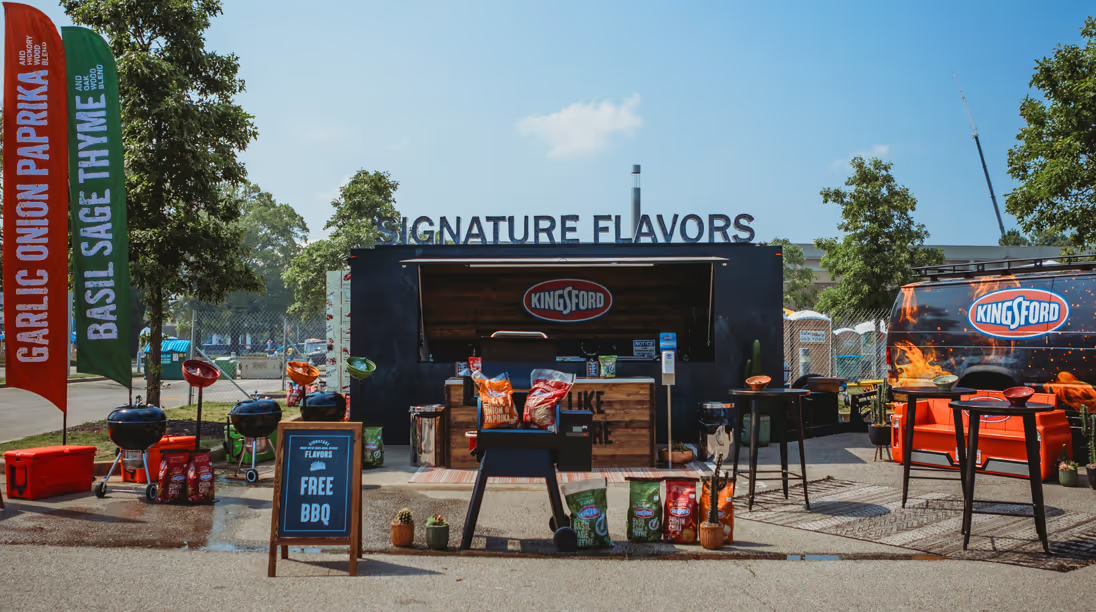
The Kingsford Smokehouse Tour built a custom smokehouse structure across 50 locations, with a Master Class Grill Station, Rooftop Lounge, and Backyard Patio, each fabricated for both visual impact and operational function. Live event display systems include custom backdrops, branded signage, product presentation platforms, and structural elements built with laser-etched and 3D-printed components that withstand event conditions and repeated transportation.
Color and Visual Design Principles
Color directs consumer attention through activation spaces and sets the brand experience's register. Color applications must account for lighting conditions, viewing distances, and surrounding environments across the full duration of an activation.
Color Psychology and Emotional Impact
Single-color schemes provide visual unity while allowing tonal variations to define activation zones and guide foot traffic. Contrasting combinations draw attention to product displays and interactive elements within the activation footprint. Brand color adaptations maintain recognition while optimizing visibility for specific environments and target demographics.
Visual Hierarchy and Consumer Flow
Size, color, and positioning relationships establish information priority and guide natural movement through activation spaces. Placement of visual elements creates photo opportunities and drives social media documentation, increasing the campaign's physical attendance.
Interactive Experience Design
Interactive design moves consumers from observation to participation. Digital integration works alongside physical installations to keep focus on direct brand interaction rather than replacing it.
Technology and Digital Integration
Digital displays and interactive screens adapt content to different audiences throughout the campaign. QR code integrations extend engagement past event timeframes by connecting physical experiences to digital brand channels. Technology serves the physical design, not the other way around.
Social Media and Photo Opportunity Design
The Kendra Scott Mother's Day Pop-Up in New York City used custom fixtures with oversized florals and natural elements to generate photo moments that drove social sharing. Photo installations must work with lighting conditions and provide clear brand visibility. Dimensional brand props create natural documentation opportunities, and visual elements built for social platforms produce organic content that extends attendance reach.

Brand Activation Visual Planning and Execution
Activation planning coordinates fabrication teams, event production staff, and logistics specialists to deliver against campaign objectives:
- Site Surveys: Identifying logistical challenges, power requirements, and contingency plans for weather or operational issues.
- Load-In Coordination: Managing equipment transportation, setup timing, and quality control.
- Installation Procedures: Custom-fabricated element delivery and setup that accounts for venue limitations and safety requirements.
- Strike Planning: Equipment removal and transportation while protecting venue properties.
Measuring Audience Engagement
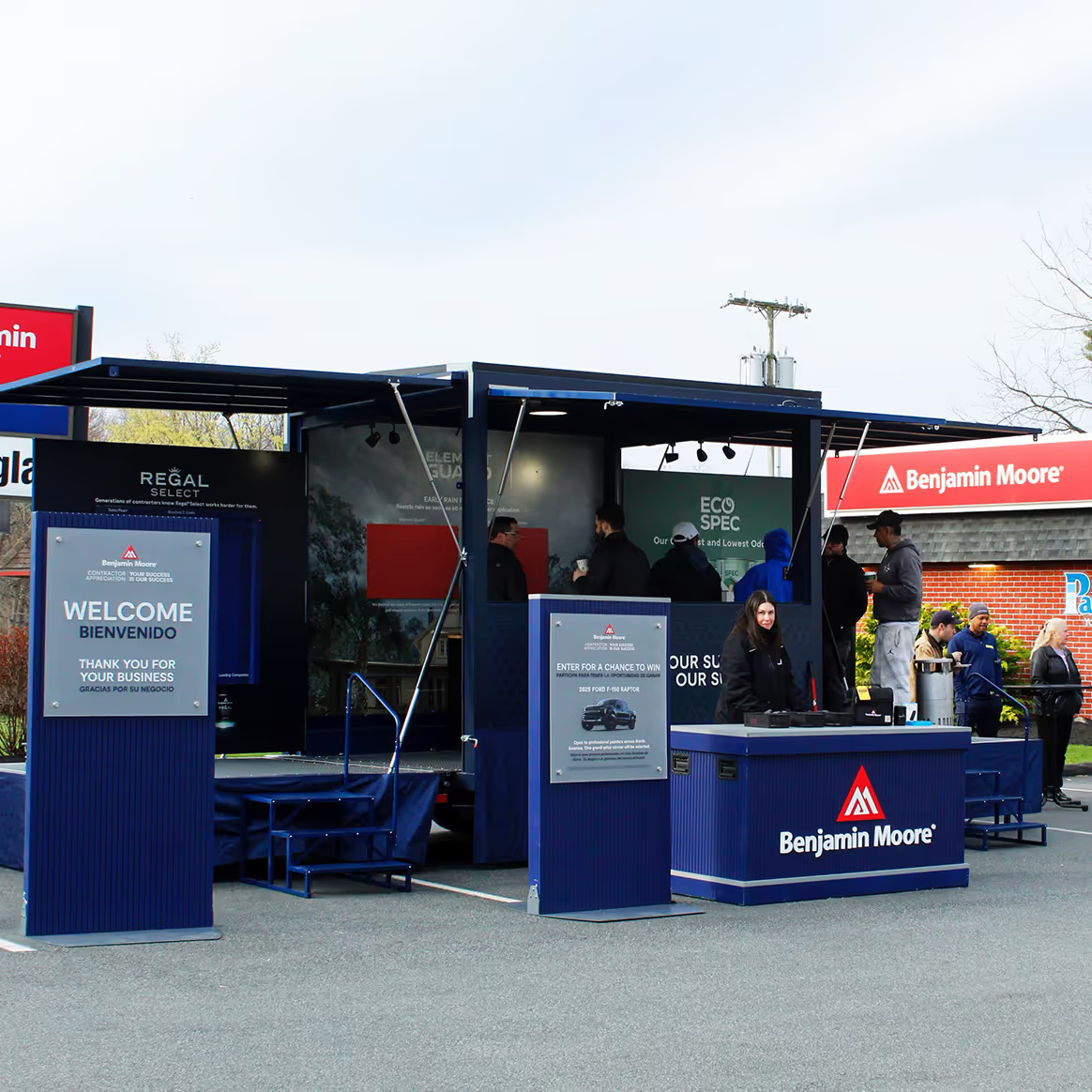
Engagement measurement tracks attendance, interaction frequency, and social content volume to quantify campaign impact. Social media monitoring captures participant-generated content, reach, and brand-mention volume before, during, and after events. The Benjamin Moore Contractor Appreciation Tour used a branded mobile vehicle to deliver appreciation gifts directly to contractor locations, a format that produced measurable relationship-building outcomes tied directly to brand visibility.
Bring Your Brand Activation Visual Design to Life
Our 75,000-square-foot Metro Detroit facility handles fabrication, from woodworking to 3D printing, for brand activations and mobile tours executed nationwide. To get started, fill out our online contact form.
Frequently Asked Questions
What is visual experiential design?
Visual experiential design combines aesthetic elements with interactive components to drive consumer participation across multiple senses. It produces brand environments through custom fabrication, color applications, and dimensional installations that prompt hands-on engagement.
Why is it called activation?
It is called activation because these experiences activate consumer emotions, behaviors, and brand connections that advertising alone does not reach. Mobile tours, live events, and custom installations produce direct consumer response and long-term brand recall.
What is the difference between brand activations and experiential marketing?
Experiential marketing is the strategy; brand activation is the execution. Brand activation delivers the actual events, mobile tours, and custom installations that create direct brand-to-consumer contact in real-world environments.
How long does custom fabrication take for brand activation visual designs?
Timelines depend on design complexity, material requirements, and production scheduling for laser etching, 3D printing, and woodworking. In-house fabrication allows for expedited production when event schedules require it.
What materials can be used for custom displays and signage?
Wood, metal, plastic, and composite materials all support laser etching, 3D printing, and traditional fabrication techniques. Material selection is based on venue requirements, durability needs, and brand aesthetic.
Do mobile tours require special permits or regulations?
Yes. Mobile tours require permits and regulatory compliance based on tour routes, vehicle specifications, and local jurisdiction requirements. Tour planning includes obtaining permits, coordinating routes, and managing compliance across all markets.