
Customer Engagement Marketing Strategies That Create Lasting Brand Connections
Consumer expectations have shifted how brands approach marketing. Customer engagement marketing moves away from passive advertising to create direct interactions between brands and their audiences. This approach prioritizes face-to-face experiences, interactive demonstrations, and brand moments that resonate beyond a single touchpoint.
Customer engagement marketing transforms consumers from passive message recipients into active participants in brand stories. Through brand activations, mobile tours, and PR boxes, companies create opportunities for dialogue and hands-on product interaction. These experiences break through digital noise to establish connections that drive loyalty, generate word-of-mouth, and produce measurable results.
Understanding Customer Engagement Marketing
Customer engagement marketing focuses on active participation rather than passive consumption. Traditional advertising sends messages to audiences. Engagement marketing invites consumers into experiences where they interact with products, provide feedback, and form connections with brands.
The shift toward engagement-focused strategies reflects changing consumer behavior. Audiences increasingly value experiences over advertisements, seeking opportunities to interact with brands on their terms. This creates demand for marketing that prioritizes connection through immersive environments and face-to-face interaction.
Customer engagement marketing produces multiple business outcomes:
- Brand loyalty strengthens when consumers actively participate in experiences rather than simply viewing advertisements. The hands-on nature of engagement creates emotional connections that persist beyond the initial interaction.
- Word-of-mouth amplification increases as memorable interactions inspire social sharing and conversation. Consumers who participate in brand experiences become advocates, sharing their stories within their networks and extending campaign reach organically.
- Purchase intent rises following hands-on product demonstrations that build understanding and confidence. When consumers can try products in low-pressure environments, they develop informed opinions that translate into purchasing decisions.
Brand Activations: Creating Multi-Sensory Consumer Experiences
Brand activations generate customer experiences through immersive environments that encourage exploration and interaction. These live events create consumer journeys with multiple touchpoints, allowing audiences to engage with brands at their own pace while discovering products through hands-on demonstrations.
Experience design ensures consumers move naturally through activation spaces, encountering brand messages and product interactions without feeling rushed. Each touchpoint serves a purpose—building awareness, demonstrating products, or capturing leads.
Interactive elements form the foundation of brand activations. Product sampling stations invite direct experience with offerings. Photo moments create shareable content that extends reach beyond physical attendees. Challenges and games maintain engagement while reinforcing brand messaging.
The Tata Harper Radiance Runway demonstrates how brand activations drive customer engagement. Activate had the opportunity to execute Tata Harper's vision by transforming New York City's High Line into a skincare journey featuring multiple touchpoints designed to educate consumers about the Radiance Collection.
Stamp cards tracked visitor participation, encouraging exploration of all activation elements. A Tata Tonic mocktail bar provided refreshment while introducing brand storytelling. Product sampling stations offered hands-on interaction with the Radiance Collection. Mini facial experiences provided engagement, with both VIP preview guests and public attendees receiving professional skincare consultations.
A branded photo wall created opportunities for documentation, while a selfie mirror allowed guests to capture their post-facial glow. A brand knowledge quiz reinforced key messaging while rewarding participation with additional product samples.

Mobile Tours: Scaling Engagement Across Markets
Mobile tours bring brand experiences directly to target audiences across geographic markets. These traveling activations maintain consistent quality while adapting to regional preferences, meeting consumers where they are rather than requiring them to travel to brand events.
Geographic flexibility allows brands to test new territories, strengthen presence in established markets, and capitalize on seasonal opportunities. Mobile tours can adapt routes based on performance data, concentrating resources in high-engagement areas while exploring emerging markets.
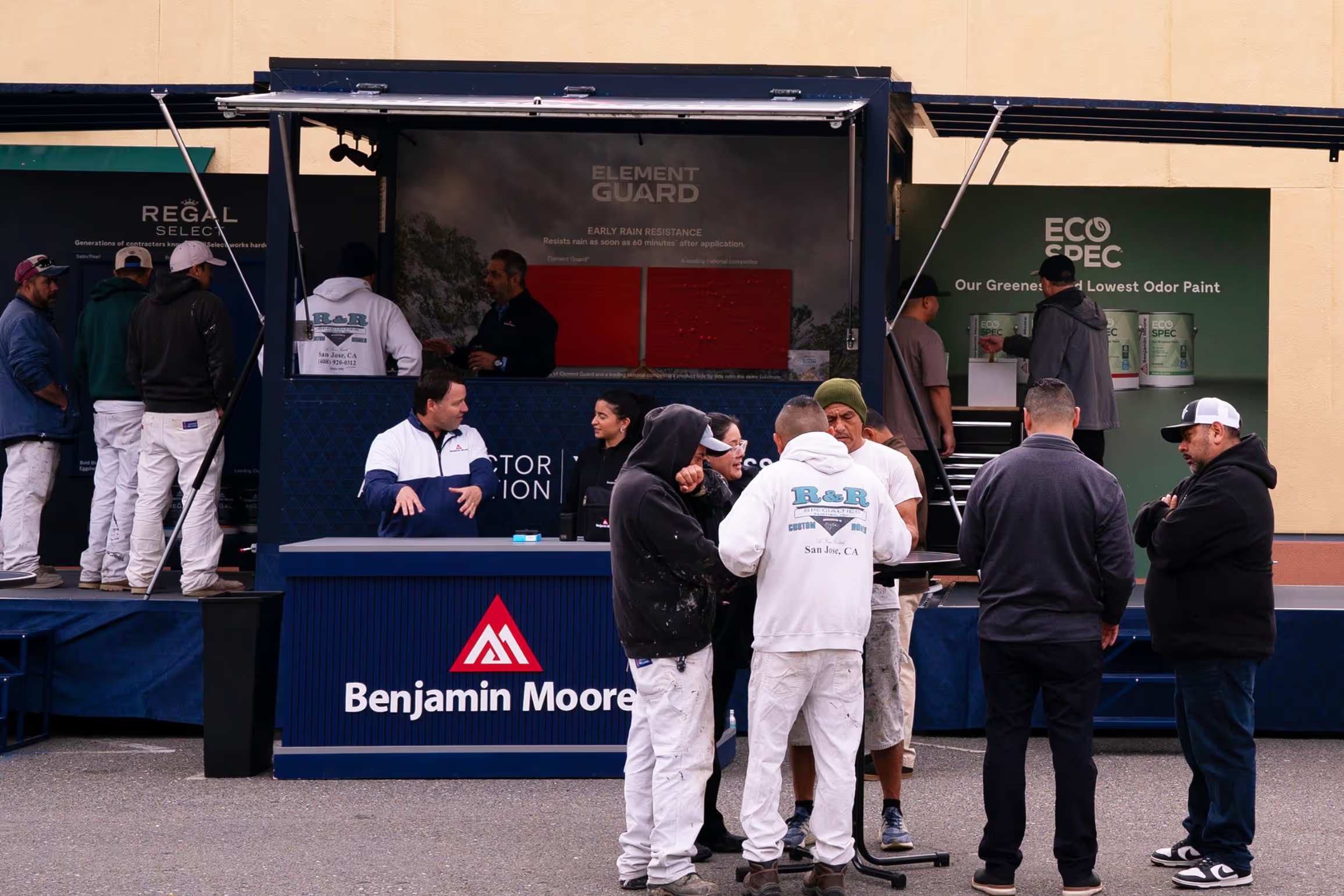
The Benjamin Moore Contractor Appreciation Tour 2025 illustrates how mobile tours create customer engagement at scale. Activate had the opportunity to execute Benjamin Moore's vision by designing a 26-foot mobile stage showroom trailer featuring millwork and interactive product demonstrations. The turnkey environment traveled to Benjamin Moore retail stores across the United States and Canada.
Interactive product demonstrations formed the engagement core. A Regal coverage comparison wall showcased product performance against competitors, allowing contractors to evaluate quality differences firsthand. An Eco Spec smell test highlighted low-VOC paint benefits through direct sensory experience.
Locally catered breakfasts provided regional personalization. Contractors chose between Carhartt coolers, Yeti can koozies, or Anker power banks as premium gifts. A sweepstakes for a custom Ford F-150 Raptor generated excitement and encouraged attendance across all market stops. Bilingual signage and local team support ensured inclusive engagement.
Measuring Customer Engagement Marketing Success
Customer engagement marketing generates data that reveals consumer behavior patterns and experience effectiveness. Understanding which metrics matter and how they connect to business outcomes demonstrates the value of experiential marketing investments.
Key engagement metrics include:
- Dwell time and interaction rates show how long consumers spend in activation spaces and which touchpoints generate the highest participation. These metrics inform future design decisions about which elements resonate most strongly.
- Consumer journey completion rates show how many attendees experience all activation elements versus only sampling portions. This helps identify flow issues that prevent full engagement.
- Social shares and user-generated content measure organic amplification as consumers document and discuss experiences within their networks. Tracking social metrics reveals which visual elements resonate while exposing brands to audiences beyond physical attendees.
- Lead quality and conversion tracking determine whether engagement attracts desired demographics and generates business opportunities. This reveals whether experiences reach the right audiences and inspire follow-through.
Connecting engagement data to business outcomes demonstrates return on investment. Brand recall studies measure how well consumers remember experiences weeks or months later. Customer loyalty metrics track whether engagement translates into repeat purchases. Purchase intent surveys reveal whether hands-on interaction increases likelihood of future transactions.
Qualitative feedback provides context for quantitative measurements. Consumer sentiment analysis reveals emotional responses to brand experiences. This combination of data and insight creates understanding of engagement effectiveness.
Activate: Where Customer Engagement Meets Measurable Results
Activate creates brand connections through three core services: brand activations, mobile tours, and PR boxes. Our work in customer engagement marketing combines customer engagement marketing strategy with execution, creating experiences that resonate with audiences across diverse markets.
Our capabilities cover every aspect of experiential marketing, from initial concept through final execution. The Activate team brings brand visions to life through brand activations that engage multiple senses, mobile tours that reach audiences across markets, and custom PR boxes that extend engagement beyond live events.
We manage the logistics of mobile tours, the coordination of live events, and the assembly of PR boxes. Our experience allows brands to focus on their objectives while we handle execution, from creative development to on-site activation.
Looking to enhance customer engagement? Connect with us to explore how brand activations, mobile tours, and PR boxes can help bring your marketing vision to life.
Frequently Asked Questions
What is customer engagement marketing and how does it differ from traditional advertising?
Customer engagement marketing creates direct interactions between brands and consumers through face-to-face experiences, product demonstrations, and immersive environments. Traditional advertising delivers one-way messages through channels like TV, print, or digital banners. Customer engagement marketing invites active participation in brand experiences, creating dialogue and hands-on interaction that builds stronger connections and generates measurable outcomes like increased brand loyalty and purchase intent.
How does customer engagement marketing improve brand loyalty?
Customer engagement marketing strengthens brand loyalty by transforming passive consumers into active participants. When audiences interact directly with products through hands-on demonstrations and engage face-to-face with brand ambassadors, they form emotional connections that persist beyond a single interaction. These experiences create memories that consumers share within their networks, reinforcing positive brand associations and building understanding that translates into repeat purchase behavior.
What types of experiences generate the highest customer engagement?
Experiences that combine multiple sensory touchpoints and offer genuine value generate the highest engagement. Brand activations featuring interactive product demonstrations, sampling stations, and photo opportunities encourage participation across different preferences. Mobile tours that bring experiences directly to consumers remove participation barriers. Experiences with personalization elements increase perceived value and strengthen connections. The most successful customer engagement experiences balance entertainment with education, creating environments where consumers naturally want to explore brand offerings.
How do you measure customer engagement marketing success?
Measuring success requires tracking both quantitative metrics and qualitative feedback. Quantitative measurements include dwell time, interaction rates, journey completion rates, social shares, and lead capture numbers. These data points reveal which elements resonate most strongly. Qualitative feedback through sentiment analysis provides context, identifying specific elements that create positive impressions. Connecting engagement data to business outcomes through brand recall studies, loyalty metrics, and purchase intent surveys demonstrates return on investment.
What metrics indicate strong customer engagement in live events?
Strong engagement shows through several indicators. High dwell time suggests consumers find the experience valuable. Elevated interaction rates at demonstration stations indicate genuine interest. Journey completion rates reveal whether attendees experience all touchpoints. Social media sharing demonstrates enthusiasm while extending reach beyond physical attendees. Quality lead capture shows whether experiences attract desired demographics and inspire follow-through. When these metrics align with pre-established goals, they indicate successful customer engagement.
How does customer engagement marketing deliver ROI for brands?
Customer engagement marketing delivers ROI through multiple channels. Brand recall improves when consumers actively participate in experiences, creating lasting impressions that influence future purchases. Word-of-mouth amplification increases as engaged consumers share experiences within their networks, generating organic reach. Purchase intent rises following hands-on demonstrations that build understanding. Customer loyalty strengthens through positive interactions, leading to repeat purchases and higher lifetime value. These combined outcomes create measurable results that justify experiential marketing investments.
What role do brand ambassadors play in customer engagement marketing?
Brand ambassadors serve as the human connection between brands and consumers during engagement experiences. They represent brand values through direct interaction, answering questions, providing demonstrations, and creating welcoming environments that encourage participation. Trained ambassadors understand product features and benefits, allowing them to educate consumers while adapting their approach to individual needs. Their presence transforms activations from static displays into dynamic experiences where consumers feel comfortable exploring offerings. Ambassador interaction quality directly influences consumer perceptions.