
Collaborative Experiential Marketing: Building Brand Connections Through Strategic Partnership
Collaborative experiential marketing represents a shift from traditional client-vendor relationships toward partnerships that create shared experiential visions. Rather than executing predetermined concepts, this approach combines client expertise with agency capabilities to develop experiences that represent brand values while achieving business objectives. Traditional approaches position agencies as service providers executing client directives, while collaborative experiential marketing establishes partnerships where both parties contribute insights, solutions, and expertise.
Brand activations represent the pinnacle of collaborative experiential marketing because they require coordination between client teams and agency partners. The complexity of coordinating stakeholders, managing live event logistics, and maintaining brand consistency across touchpoints makes collaboration essential for creating experiences that resonate with target audiences while delivering measurable results that justify marketing investment.
The Foundation of Collaborative Strategy
The foundation of collaborative experiential marketing begins when we meet with clients for initial intake to determine goals and vision for each project. We explore not just what clients want to achieve, but how their brand values translate into physical experiences that resonate with target audiences. This process involves understanding the client's marketing objectives, budget parameters, target audience expectations, and success metrics.
After we understand the client's vision, we strategize to transform this foundation into concepts that meet established goals. Partnership development occurs when client insights combine with agency capabilities to generate solutions that neither party could develop independently. This requires ongoing dialogue, refinement, and respect for each party's expertise:
- Client teams bring understanding of their brand, market position, and audience preferences
- Agency teams contribute experience in translating concepts into executable experiences
- Both parties work together to develop solutions that align with brand objectives and practical execution requirements
Understanding brand values and translating them into physical experiences represents one of the most critical aspects of collaborative strategy development. Brand values must move beyond marketing language to become tangible elements that audiences can see, touch, and interact with. This process requires close collaboration to ensure that every design decision, material selection, and interaction opportunity reflects the brand's core identity.
During strategy development, we establish the framework for ongoing collaboration, identifying stakeholders from both organizations and creating communication schedules that make the most of collaboration while respecting each party's time and expertise.
Collaborative Design and Development Process
Daily Production Collaboration
The collaborative design and development process strengthens when we work daily with clients and their in-house teams to design, produce, and prepare for each activation. This phase is an involved period of collaboration, requiring constant communication, shared decision-making, and coordinated workflow management between client and agency teams.
Our ongoing partnership allows for real-time adjustments as designs evolve, materials are sourced, and logistical requirements become clearer. The collaborative approach prevents last-minute changes by identifying potential issues early and addressing them through joint problem-solving.
Multi-Department Coordination
Brand activations typically involve marketing, legal, operations, and sometimes additional stakeholders, depending on the activation scope. Collaboration requires coordinating input from various client departments while maintaining project momentum and timeline adherence. This involvement ensures that all brand requirements are met while respecting constraints and budget parameters.
Cross-functional decision-making throughout the development process requires establishing clear protocols for addressing challenges and opportunities that arise during production. This includes creating escalation procedures for decisions that impact timeline, budget, or brand representation, while empowering team members to make operational decisions that keep production moving forward.
Multi-Brand Collaboration
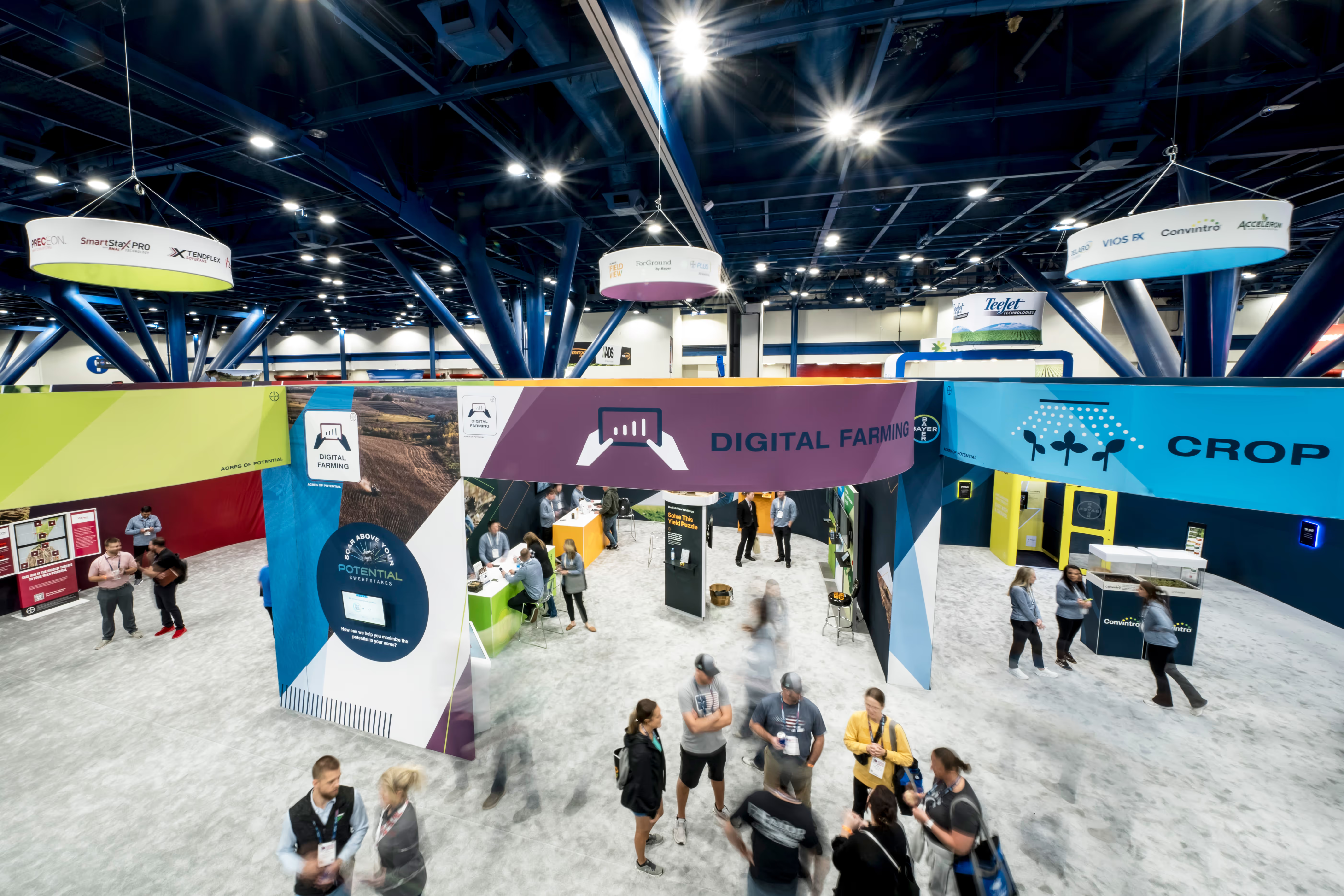
Bayer's Commodity Classic 2024 activation demonstrates the complexity of managing collaborative design across brand teams while creating a cohesive experience. We had the opportunity to work with six different Bayer brand teams, coordinating the reception, organization, and distribution of over 12,000 giveaways while designing distinct spaces for each brand within one unified 110' x 110' booth experience. This project required collaboration to balance individual brand needs with visual coherence and operational efficiency.
The Bayer collaboration involved managing approval processes, coordinating brand guidelines, and creating spaces that allowed each brand to tell its story while contributing to a larger narrative about Bayer's agricultural solutions. The 14-foot LED façade entryway required coordination between teams to ensure brand representation while creating a visual draw that attracted thousands of visitors to the booth.
Structured Review Process
The collaborative development process also involves regular check-ins and milestone reviews where both client and agency teams assess progress against established objectives and timelines. These structured collaboration points ensure project alignment while allowing for necessary adjustments:
- Progress assessment against original goals and timelines
- Identification of potential issues before they impact project delivery
- Adjustments based on production realities or emerging opportunities
- Continuous alignment between creative vision and practical execution requirements
Execution Through Collaborative Partnership
On-Site Coordination
When we activate brand experiences, collaborative experiential marketing comes to life through coordinated execution that relies on partnership between client and agency teams. On-site collaboration becomes important during this phase, as live events require real-time decision-making and immediate response to changing conditions. The success of brand activations depends on maintaining brand standards while adapting to practical realities of live event execution.
Real-Time Decision Making
Real-time adjustments and shared decision-making become important capabilities during live events, where unexpected situations require immediate response while maintaining brand integrity. Collaborative partnerships enable quick decision-making because both client and agency teams understand the brand objectives and have established trust through the development process. This shared understanding allows for adjustments without lengthy approval processes that could impact activation effectiveness.
The collaborative approach to execution ensures that brand activations maintain their intended impact while adapting to real-world conditions. This partnership structure enables smooth adjustments throughout the activation:
- Managing guest flow and responding to unexpected interest levels
- Making tactical adjustments that improve guest experience without compromising brand representation
- Maintaining consistent brand messaging across all interaction points
- Addressing operational challenges through shared problem-solving
Brand Values in Action
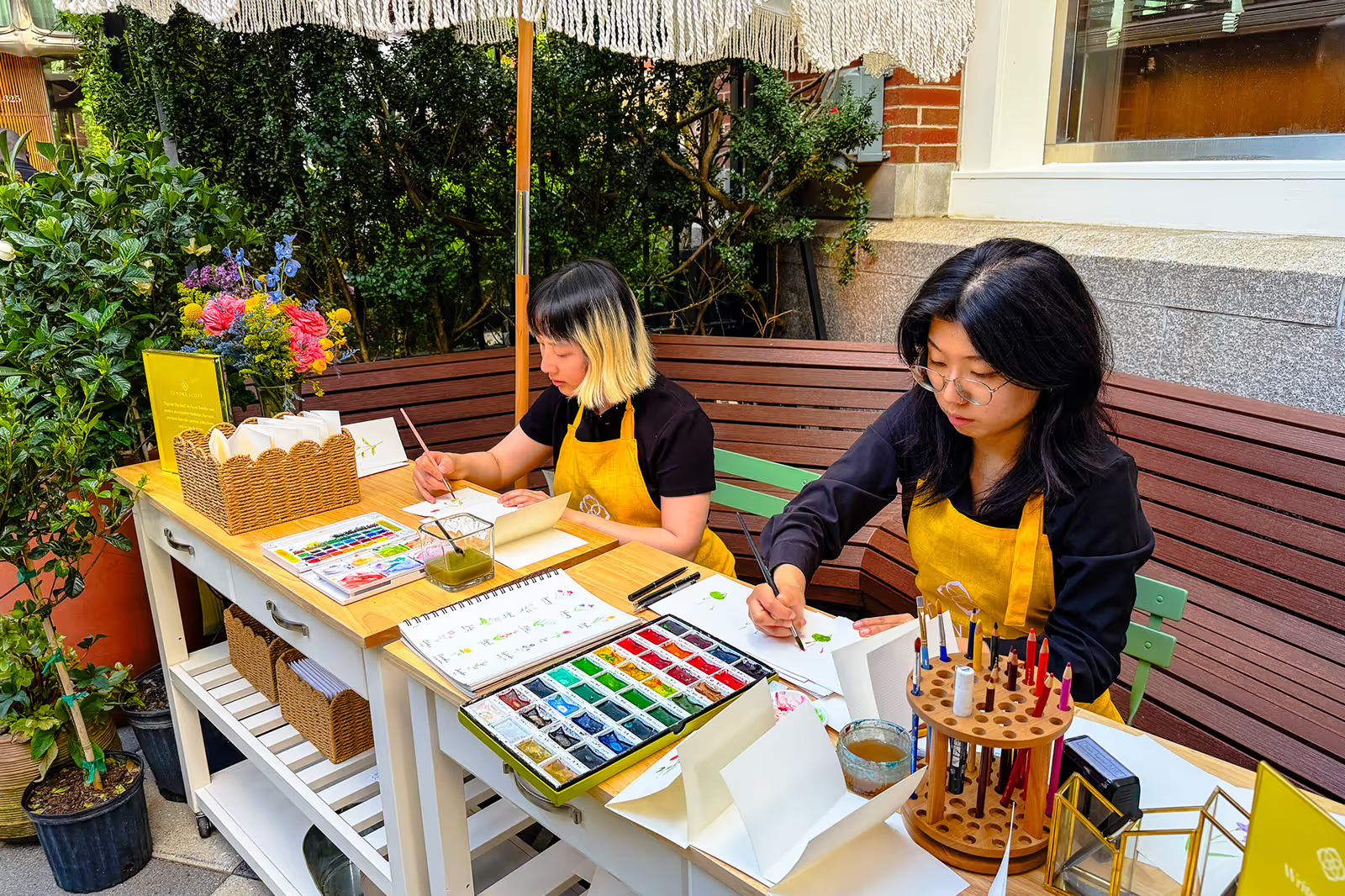
The Kendra Scott NYC Mother's Day activation illustrates how collaborative planning translates brand values into physical experiences that achieve both brand awareness and sales objectives. We had the opportunity to work with Kendra Scott to position the brand as one that values and celebrates motherhood by creating emotional connections through meaningful experiences. The collaboration focused on weaving product storytelling into each activation moment, creating an experience that drove both connection and sales.
The Kendra Scott collaboration involved translating brand values into activation elements, from custom-built fixtures that supported product display to interactive experiences that invited participation and social media sharing. Each component required collaborative review to ensure alignment with brand messaging while meeting operational requirements for urban New York City implementation.
Brand ambassador alignment and consistent messaging throughout the activation required collaboration during both preparation and execution phases. The Kendra Scott activation included multiple interaction points — conversation cards, floral framing activities, jewelry customization, and watercolor greeting cards — each requiring brand ambassadors to represent Kendra Scott values while facilitating guest experiences.
Quality Monitoring
On-site collaboration also involves continuous quality monitoring to ensure that every guest interaction meets brand standards. This requires clear communication between client and agency teams about expectations, regular check-ins during the activation, and immediate response to any issues that could impact brand representation or guest experience.
Activate: Where Collaborative Vision Becomes Reality
Activate specializes in brand activations that require client collaboration, transforming shared visions into impactful experiences that drive results. Our approach to collaborative experiential marketing combines partnership development with execution capabilities, ensuring that client expertise works alongside agency capabilities throughout the entire process.
Our 75,000 square foot facility provides in-house capabilities that enable coordination between client teams and our production processes. This approach eliminates many of the coordination challenges that can complicate collaborative projects, allowing client teams to focus on input while we manage operational execution.
Our experience managing multi-brand collaborations and compressed timelines demonstrates our capability to coordinate stakeholder requirements while maintaining project momentum. Whether working with multiple brand teams or bringing together various client departments, we provide the structure and expertise that makes collaborative experiential marketing work.
Frequently Asked Questions
What is collaborative experiential marketing and how does it differ from traditional agency relationships?
Collaborative experiential marketing establishes partnerships between brands and agencies rather than traditional client-vendor relationships. This approach combines client expertise with agency capabilities throughout the entire process, from initial marketing strategy through execution and measurement. The result is experiences that represent brand values while using execution capabilities.
How does collaborative experiential marketing improve brand activation results?
Collaborative approaches improve results by combining client knowledge of their brand and audience with agency expertise in creative development and execution. This combination ensures that every element of the activation aligns with brand objectives while meeting requirements for implementation. The collaborative process also enables real-time adjustments that improve guest experience without compromising brand representation.
What makes collaborative experiential marketing effective for live events?
Live events require coordination between stakeholders and real-time decision-making that benefits from established collaborative relationships. The trust and shared understanding developed through collaborative planning enables quick adjustments during live events while maintaining brand integrity. This partnership approach ensures that brand activations achieve their intended impact while adapting to real-world conditions.
Why do collaborative experiential marketing campaigns generate better ROI for brands?
Collaborative campaigns generate better ROI by ensuring that every element of the experience aligns with brand objectives while improving operational efficiency. The combination of client knowledge with agency expertise creates experiences that resonate with target audiences while avoiding misalignments that can occur in traditional client-vendor relationships.
How does collaborative planning improve complex multi-brand activation management?
Collaborative planning establishes frameworks for coordinating stakeholder requirements while maintaining project momentum. This approach enables management of approval processes, brand guidelines, and logistical requirements while creating cohesive experiences that serve all stakeholder objectives.
What role does collaborative experiential marketing play in modern brand strategy
Collaborative experiential marketing serves as a bridge between digital marketing efforts and face-to-face consumer engagement. It allows brands to create authentic connections that complement online campaigns while providing measurable results through direct consumer interaction.
When should brands consider collaborative experiential marketing?
Brands should consider collaborative experiential marketing when they need to create deeper consumer connections, launch new products, enter new markets, or differentiate themselves from competitors through memorable experiences that digital marketing alone cannot provide.