
How Audience Segmentation Drives Mobile Tour Success
Mobile tours succeed when they reach the right audiences in the right markets with experiences designed for specific demographics. Audience segmentation provides the foundation for these decisions—determining where mobile tours travel, when they activate, and how experiences connect with target consumers. At Activate, segmentation begins during initial intake and informs every aspect of mobile tour strategy, from routing research to experience design to measurement criteria.
This approach applies across experiential marketing services—mobile tours, brand activations, and PR boxes—but mobile tours demonstrate segmentation most clearly. Every routing decision, market selection, and programming choice reflects an understanding of target demographics and their behaviors. The result is mobile tours that deliver measurable results by connecting brands with the audiences that matter most.
What Is Audience Segmentation in Experiential Marketing?
Audience segmentation divides target markets into groups based on shared characteristics. These segments typically fall into four categories:
- Demographics: Age, income, occupation
- Psychographics: Values, interests, lifestyle
- Behavior: Purchasing patterns, brand interactions
- Geography: Location, climate, urban versus rural
Each category provides insight into who the audience is and how they engage with brands.
This differs from broad-reach marketing that attempts to connect with everyone. Segmentation recognizes that different audiences respond to different messages, experiences, and products. A mobile tour designed for college students will look different from one targeting professional contractors—from the markets visited to the experience elements to the giveaways offered.
For experiential marketing, segmentation drives ROI by ensuring resources focus on audiences most likely to engage, convert, or build brand connections. Mobile tours cover geography and require logistics. Without clear segmentation, tours risk investing time and resources in markets where the target audience has low concentration or in experiences that don't resonate with the people who show up.
How Segmentation Shapes Mobile Tour Strategy
Before a mobile tour visits its first market, demographic and geographic research identifies where target audiences concentrate. This research considers population density, lifestyle indicators, purchasing behaviors, and competitive presence. The goal is connecting brands with audiences where they live, work, and spend time—not just where venues are available or permits are easy to secure.
Market selection balances audience concentration with operational feasibility. Some markets offer high target demographic density but present logistical challenges. Others provide easy access but lower audience quality. Segmentation helps prioritize markets that deliver the best combination of reach and engagement potential.
Timing decisions also reflect audience behavior patterns. College students have different availability than working professionals. Parents with children respond to different seasonal patterns than young adults. Mobile tours built for specific segments schedule activations when target audiences are most likely to engage—whether that means weekends, evenings, or specific seasons tied to product usage or cultural moments.
Coach Tabby Tour
Activate had the opportunity to execute Coach's vision for the Tabby Tour, which demonstrated B2C demographic segmentation focused on college students. The routing strategy concentrated on campus locations where this demographic gathers. Rather than attempting to reach a broad consumer base, the tour went directly to where the target audience spends time.
Experience elements aligned with college student preferences and behaviors. Guests started by scanning a QR code to take a digital quiz—a mobile-first interaction that matched how this demographic engages with brands. The quiz helped guests discover their Tabby "flavor" and select color-coordinated ice cream with matching toppings. This personalization approach resonated with a segment that values individual expression and shareable moments.
The pairing of Tabby purses and flavors with Little Words Project bracelets created an experience where every element connected to the brand story. The monochromatic design aesthetic and dimensional arch display provided visual impact. Product interaction opportunities—touching, trying on, and exploring Coach Tabby bags—matched the segment's preference for hands-on experiences before purchase decisions.
The tour design recognized that college students engage through social sharing and visual storytelling. Every element, from the oversized Tabby purse centerpiece to the color-blocking aesthetic, created moments worth capturing and sharing.

Benjamin Moore Contractor Appreciation 2025
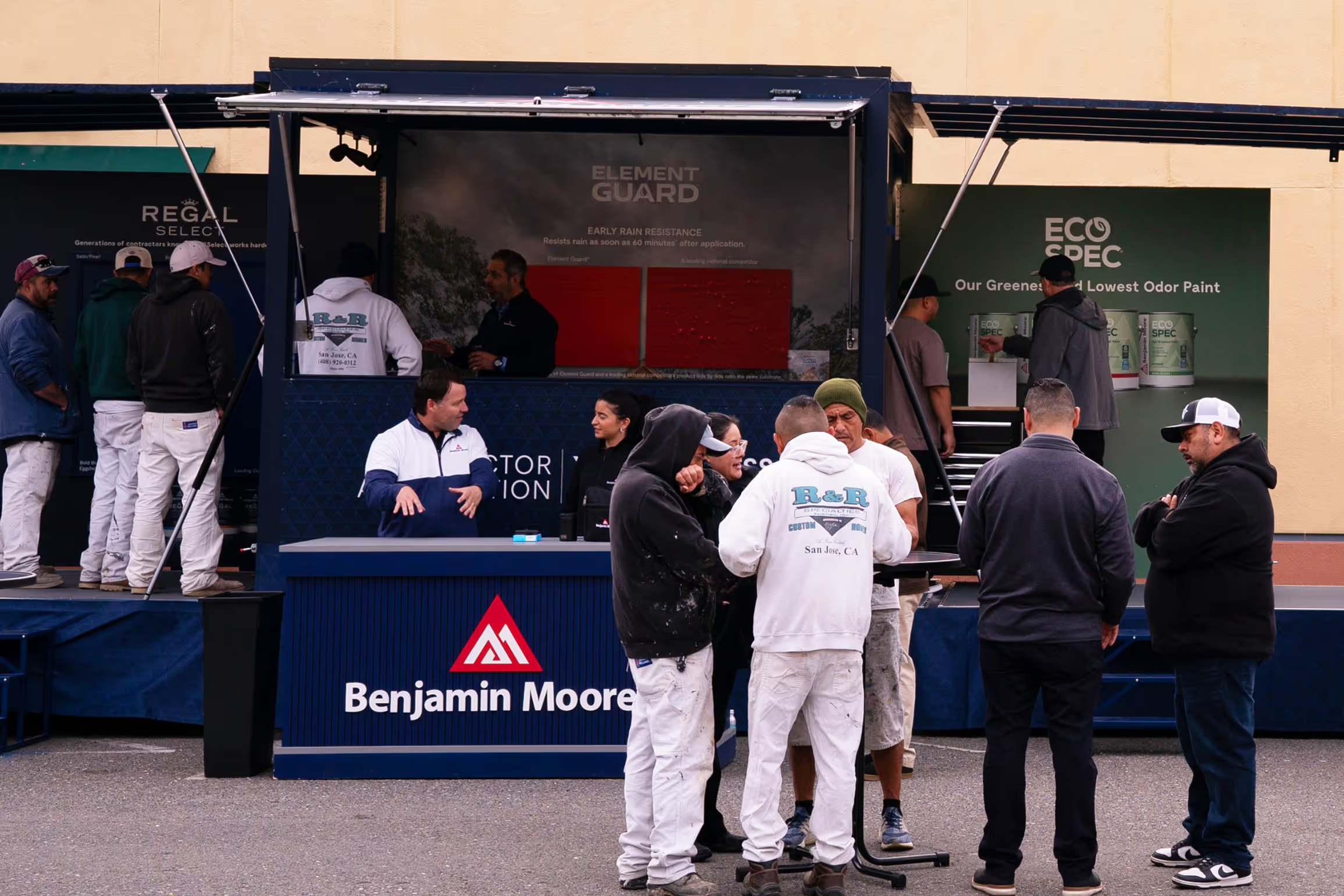
The Benjamin Moore Contractor Appreciation Tour targeted a different segment—professional contractors—and every decision reflected this B2B audience's needs and preferences. Market selection focused on areas where contractor concentration justified the investment. This wasn't about reaching the most people; it was about reaching the right professionals in markets where Benjamin Moore has retail presence.
Programming matched what matters to this segment. Activate produced a 26-foot mobile stage showroom trailer featuring product demos comparing Regal coverage to competitors and a hands-on Eco Spec smell test highlighting low-VOC benefits. These were educational opportunities that helped contractors make informed product decisions. This B2B audience values information that supports their work.
The locally catered breakfasts recognized that contractors start work early and appreciate hospitality that respects their time. Gifts—Carhartt coolers, Yeti koozies, Anker power banks—aligned with the tools and gear this segment uses daily. The sweepstakes for a Ford F-150 Raptor reflected understanding of what motivates professional contractors. These weren't generic giveaways; they connected directly to segment interests.
Both case studies show how segmentation drives every aspect of mobile tour strategy. The target demographic determines routing, market selection, timing, programming, experience design, staffing, and measurement. A mobile tour without clear segmentation makes arbitrary decisions. A mobile tour built on audience understanding makes choices that deliver measurable results.
The Activate Process: Segmentation from Start to Finish
Audience segmentation isn't a single decision—it's woven throughout Activate's process from initial intake through final measurement. Each phase builds on demographic understanding to create mobile tours that connect with target audiences.
We begin by establishing the foundation during initial intake, where goals and vision are determined while identifying target demographics. This includes understanding who the brand wants to reach, where those audiences concentrate, what motivates them, and how they currently interact with the brand or category. Without this clarity, subsequent strategy lacks direction.
We then develop concepts with specific audiences in mind. Brainstorming responds to demographic insights gathered during intake. If the target segment values sustainability, concepts might include environmental messaging or materials. If the audience prioritizes entertainment, programming might emphasize interactive elements and social sharing opportunities. Strategy emerges from audience understanding, not assumptions.
Production translates concepts into experience elements tailored to segment preferences. Design decisions reflect what resonates with the target demographic. A mobile tour for Gen Z audiences might emphasize bold colors, digital components, and personalization. A tour for corporate decision-makers might prioritize clean design, information-rich content, and professional presentation.
On-site operations and staffing align with audience expectations. Brand ambassadors are selected and trained based on who will connect most with the target segment. Some audiences respond to high-energy enthusiasm while others prefer knowledgeable professionalism. Staffing decisions reflect demographic understanding just as much as routing or design choices.
The turnkey approach manages segmentation strategy through execution. Clients don't need to coordinate research, routing, design, staffing, and measurement separately—demographic insights gathered early translate into decisions throughout the mobile tour lifecycle.
Activate: Creating Mobile Tours for Target Audiences
Activate creates brand connections through mobile tours, PR boxes, and brand activations. The mobile tour approach begins with segmentation during initial intake—understanding target demographics, researching markets, and mapping audience behaviors. This foundation informs routing strategy, experience design, staffing decisions, and measurement criteria.
With in-house logistics, fulfillment capabilities, and turnkey operations, mobile tours are executed to reach the right audiences in the right markets. The 75,000 square foot facility in Metro Detroit supports assembly, fabrication, and logistics coordination. This infrastructure allows mobile tours to launch and maintain quality standards across all markets.
Work with global brands demonstrates how segmentation drives measurable results. From college campuses to retail parking lots to trade shows, mobile tours succeed when they connect with audiences who matter most to the brand.
Looking to bring your brand directly to target audiences? Connect with Activate to explore how mobile tours can enhance your experiential marketing strategy.
Frequently Asked Questions
What is audience segmentation in experiential marketing?
Audience segmentation divides target markets into groups based on demographics, psychographics, behavior, and geography. For mobile tours and brand activations, this means designing experiences for specific audiences rather than trying to reach everyone. A tour for college students looks different from one for professional contractors—from the markets visited to the programming to the giveaways. Segmentation focuses resources on audiences most likely to engage, which drives better ROI.
How does audience segmentation shape mobile tour routing strategy?
Routing starts with research on where target audiences actually are. This means looking at population data, lifestyle patterns, and purchasing behaviors to find markets with high demographic concentration. The goal is reaching audiences where they live and work, not just picking convenient venues. Market selection balances audience density with logistics to find the best opportunities for engagement.
What demographic factors determine mobile tour market selection?
Market selection looks at age, income, occupation, household type, and lifestyle patterns. Geographic factors matter too—urban versus rural, climate, regional preferences. Beyond basics, market selection considers when the target segment is available to engage and how they typically interact with brands. All these factors help determine which markets offer the strongest potential for results.
How do you design mobile tour experiences for specific audience segments?
Design starts with what matters to the target segment. College students on the Coach Tabby Tour got a digital quiz, color-coordinated ice cream, and shareable moments. Professional contractors at the Benjamin Moore tour got product demos, catered breakfast, and trade-focused gifts like Carhartt coolers. Everything from visual design to interactions to giveaways reflects what resonates with that specific audience.
How does segmentation inform brand activation design?
Brand activations use segmentation to map how different audiences move through space and what grabs their attention. Some segments want competitive challenges. Others prefer photo opportunities or learning about products. The Detroit Lions NFL Draft activation included football challenges for some fans and memorabilia displays for others. Creating multiple touchpoints lets different segments find what works for them.
When should audience segmentation begin in the mobile tour planning process?
Segmentation starts at the beginning—during initial intake when goals and target demographics are identified. Understanding the audience early shapes everything that follows: strategy development, experience design, staffing decisions, and measurement criteria. Starting with segmentation ensures every decision throughout the process connects back to who you're trying to reach.
How does audience segmentation impact mobile tour ROI?
Segmentation improves ROI by directing resources to markets and audiences most likely to engage. Without it, tours can end up in markets where the target audience barely exists or with programming that doesn't connect. Segmentation means better routing decisions, programming that resonates, and staffing that relates to the audience. This creates stronger engagement, better leads, and more measurable results.
What metrics measure successful segmentation in experiential marketing?
Engagement rates show if the right people showed up and participated. Dwell time reveals if programming held their attention. Lead quality and conversions indicate whether you reached the intended audience. Geographic performance data shows which markets delivered based on demographic concentration. Brand recall and sentiment reveal if the experience created connections. These metrics help refine segmentation for future tours.