
Mobile Showroom Trailers: Product Displays on the Road
Custom mobile showroom trailers bring products directly to customers instead of waiting for customers to find you. These traveling display spaces are set up in parking lots, at festivals, at retail partners' locations, and at community events—anywhere your target audience gathers. Instead of hoping people walk into a store, brands drive right up to them with full product lines ready for hands-on interaction.
Vehicle Options and Interior Layouts
Mobile tour setups are customized based on what you're showcasing and where you're going. A paint company demonstrating products to contractors needs a different space than a fashion brand creating Instagram moments on college campuses. The vehicle choice depends on product size, audience flow, and route requirements.
Mobile Tour Configurations
Common configurations include:
- Full-Size Trailers: Large-scale tours use semi-trailers for automotive showcases, furniture displays, or any activation requiring substantial display space and room for multiple interaction zones.
- Expandable Structures: Shipping containers or trailers with slide-out sections create additional space when deployed, offering flexibility for different venue sizes while staying road-ready between stops.
- Converted Vehicles: School buses, box trucks, and specialty vehicles become self-contained brand experiences—everything travels together without separate tow requirements.
- Custom Builds: Tours incorporate refrigeration for food sampling, climate control for product protection, or open-air designs for outdoor demonstrations based on brand needs.
Built-In Systems and Technology
Climate control keeps products and customers comfortable, whether you're in Phoenix in July or Minneapolis in January. Electrical systems run from generators or plug into venue power to support lighting, video screens, payment terminals, and any interactive displays. Many experiential demonstration vehicles now include internet connectivity and inventory tracking that syncs with warehouse systems in real time.
Why Brands Choose Mobile Retail Trailers
Custom mobile showroom trailers solve the problem of getting products in front of people who won't come to you. Trade shows work for B2B product displays, but reaching everyday consumers requires going where they already are. The experiential marketing vehicle pulls up, products come out, and suddenly, you're the most interesting thing happening in that parking lot.
Geographic Targeting Without Permanent Locations
Route planning puts you in front of specific demographics at the right time. Outdoor brands hit REI parking lots in adventure towns during peak season. Beauty companies set up at music festivals where their target customer is already spending the weekend. You can test market reception in Portland before committing to a lease, or blanket the Southeast during product launch without building out 15 stores.
Budget Reality Versus Brick-and-Mortar
Leases, buildouts, utilities, property taxes—permanent retail spaces eat budgets fast. One mobile unit serves 30 markets in a year, rather than just one neighborhood. You're spreading that investment across actual geographic reach instead of hoping enough people drive to your single location—no 10-year lease commitment hanging over your head either.
Product Categories for Mobile Tours
Mobile showrooms work across consumer product categories where hands-on interaction drives purchase decisions:
- Fashion and Accessories: Pop-up boutique experiences at festivals and campus events where customers try on products, explore collections, and take home branded items.
- Home Goods and Furniture: Room vignettes showing products in lifestyle contexts, letting people touch materials, test furniture, and see how pieces work in actual spaces.
- Beauty and Personal Care: Product sampling stations with demonstrations, letting consumers try products and receive samples while learning about benefits and applications.
- Food and Beverage: Tasting experiences with brand education, recipe demonstrations, and product comparisons that showcase quality and performance.
Mobile Showroom Examples
Custom mobile showroom trailers work across different product categories and target demographics. Here's how two brands used mobile retail solutions to reach college audiences:
IKEA Back to School Tour
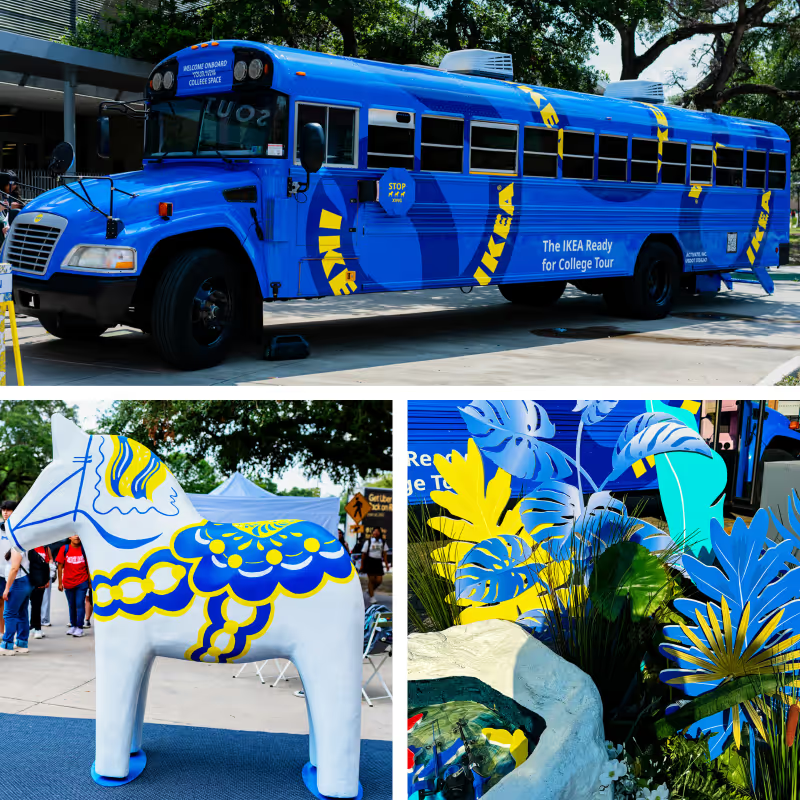
IKEA converted three school buses into traveling dorm showrooms for college campuses. Each bus featured a styled mock dorm room leading to interactive stations—DIY succulent planting, photo moments, games, and prize redemption. The tour drove Friends & Family sign-ups and direct sales while students explored furniture options.
Coach Tabby Collection Tour
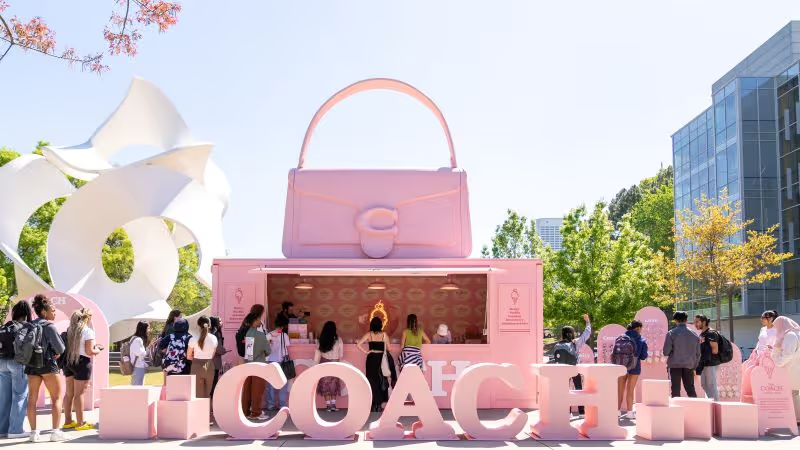
Coach built a custom-wrapped shipping container topped with an oversized Tabby purse for college campuses. Students took digital quizzes to find their Tabby "flavor," selected coordinated ice cream and bracelets, then explored actual bags on dimensional arch displays. The setup created photo moments that encouraged social sharing.
Take Your Brand on the Road With Activate
Activate executes mobile tours from concept through the final market stop. We handle vehicle design, routing strategy, permitting, staff training, and on-site operations—the full program from our 75,000-square-foot Metro Detroit facility, where we manage fabrication, graphics, and pre-tour prep. Connect with us to discuss bringing your products directly to the customers who need to see them.
Frequently Asked Questions
What are mobile showroom trailers and how do they work?
Mobile showroom trailers are customized vehicles that bring product displays directly to target audiences at events, retail locations, and community gatherings. These trailers function as traveling retail spaces with product displays, interactive demonstrations, and staff to engage customers face-to-face.
How do mobile marketing trailers differ from traditional retail spaces?
Mobile marketing trailers eliminate lease commitments and buildout costs while reaching multiple markets throughout the year instead of a single location. These vehicles adapt to seasonal opportunities and test new markets without the overhead of permanent storefronts.
What types of products work best in mobile showroom configurations?
Mobile showrooms work well for fashion, home goods, beauty products, and food items where hands-on interaction drives purchase decisions. The trailer format allows customers to touch, try, and experience products before buying while receiving direct brand education.
How are mobile tour routes and locations determined?
Route planning targets specific demographics in concentrated markets based on seasonal patterns, local events, and retail partner opportunities. Each location gets evaluated for logistical access, permit requirements, and alignment with campaign objectives to maximize reach.
What makes mobile retail trailers effective for brand activations?
Mobile retail trailers create face-to-face connections that digital marketing cannot replicate, offering immediate product interaction and authentic engagement. These experiences generate direct consumer feedback while building relationships through personal demonstrations and conversations.