
Mobile Marketing Tour Trends: Strategic Insights for Brand Activation Success
Mobile marketing tour trends for 2026 show how brands are connecting with audiences face to face: hands-on product experiences and brand moments that a digital campaign can't replicate. Marketing decision-makers evaluating experiential programs need to track these mobile tour marketing trends as execution changes this year.
Activate executes mobile tours for global brands, managing route planning, vehicle design, staffing, and performance measurement. Its work across industries surfaces the patterns that drive engagement and the results worth measuring.
What Is a Mobile Marketing Tour?
A mobile marketing tour is a branded vehicle, trailer, or fleet that travels to multiple markets to deliver a live brand activation directly to an audience, rather than waiting for that audience to visit a store or event venue. Programs typically pair a wrapped vehicle with product demonstrations, sampling, and trained brand ambassadors at each stop.
Unlike a single-location event, a mobile tour follows a planned route across cities, retail parking lots, college campuses, or industry gatherings over weeks or months. The format works because it puts a brand in front of an audience on their own ground, on a schedule that supports both local relevance and national reach.
Mobile Tour Reach and Purchase Intent, By the Numbers
These mobile marketing trends show up clearly in the reach numbers, which are straightforward to quantify. Industry measurement standards apply a multiplier of 101 impressions per mile driven for a branded vehicle, a figure that traces to a 1977 American Trucking Association study on vehicle visibility and still anchors how the industry counts drive-by exposure.
Impressions are only half the story. Experiential marketing research tracked by outlets including EventTrack has found that roughly 74% of consumers say a brand experience makes them more likely to purchase the product afterward. Mobile tours help close this gap by putting a product directly in someone's hands.
Trend #1: Strategic Market Concentration Over Broad Geographic Coverage
Route planning determines mobile tour success before the first activation begins. Brands are replacing broad geographic coverage with focused market plans that concentrate resources where they'll generate the strongest return. Previous tour performance, demographic data, and local market conditions inform these decisions rather than assumptions about where audiences might be.
Routing considers several factors:
- Market analysis identifies areas where target demographics concentrate, letting tours reach those audiences while cutting unnecessary travel between stops.
- Year-over-year performance data shows which markets consistently deliver engagement, directing budgets toward proven opportunities over experimental ones.
- Seasonal patterns and local calendars shape timing so tours arrive when audiences are receptive and competing events won't split attention.
- Bilingual capabilities and local teams help tours adapt to regional differences and deliver a local experience without a full program overhaul for each market.
The result is execution that adapts to seasonal patterns and delivers impact per stop rather than coverage for its own sake. Mobile tours work when they meet audiences where they already gather, not when they try to be everywhere at once.
Trend #2: Multi-Layered Experiences Replace Traditional Sampling
Mobile tours now function as complete brand experiences rather than extended sampling opportunities. Stacking multiple engagement elements increases dwell time and creates interactions that justify the time consumers invest in attending.
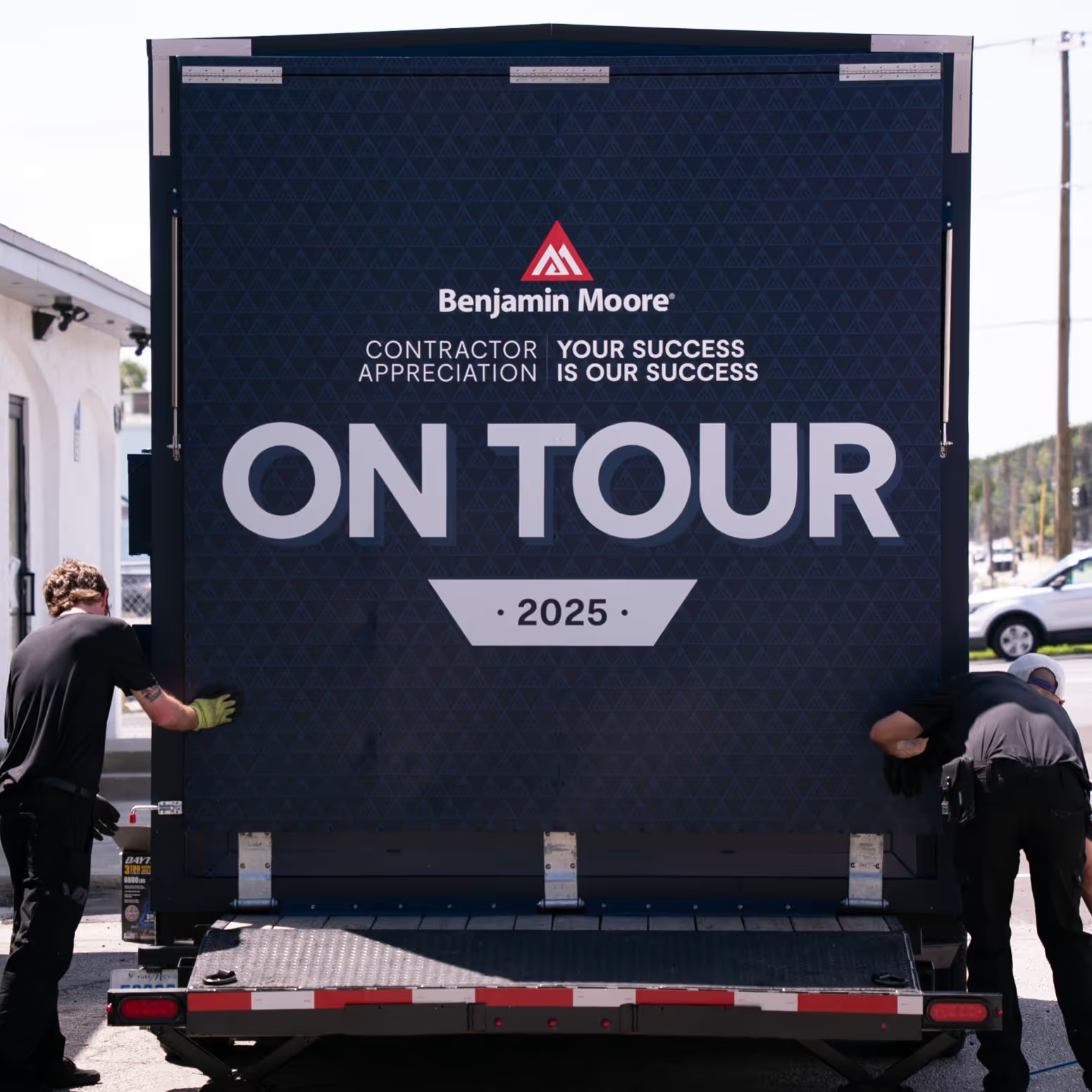
Activate executed this for Benjamin Moore's 2025 Contractor Appreciation Tour, which featured a 26-foot mobile showroom trailer with complete millwork and hands-on demonstrations. The activation offered contractors several reasons to participate:
- Hands-on demonstrations included a Regal coverage comparison wall benchmarking performance against competitors and an Eco Spec smell test highlighting low-VOC paint benefits.
- Local breakfast catering opened each stop with regional food options.
- Gift selection let registered attendees choose between Carhartt coolers, Yeti can koozies, or Anker power banks, functional items attendees would use.
This approach works because it respects contractor schedules. Rather than asking them to stop by solely for product information, the mobile marketing tour provided breakfast, demonstrations, gifts, and sweepstakes entry. Each element served a purpose: giving contractors more reasons to stay meant more time actually engaging with the brand.
Tours that combine value across multiple elements create experiences people want to share. Attendees share experiences on social media naturally when they enjoyed participating, not because they were explicitly asked to post.
Trend #3: Mobile Environments Built for Any Condition
Mobile environments have to maintain brand standards across venue types and weather conditions. This flexibility separates tours that execute consistently from those that struggle when conditions aren't ideal.
The Benjamin Moore tour used a self-contained trailer design with complete millwork, proper lighting, and climate control. These elements maintained experience quality whether the activation sat in a parking lot during summer heat or an outdoor venue facing unpredictable weather. The design let the program proceed when simpler outdoor setups would have required cancellation.
- Modular builds, from glass box trucks and RV conversions to gooseneck trailers, adapt to each venue's showroom space.
- Streamlined site design speeds setup without sacrificing brand presence.
- Vehicle wraps create instant visual recognition.
- Interior flow guides attendees through core brand moments regardless of crowd density.
Trend #4: Technology Integration That Enhances Face-to-Face Connections
Technology integration enhances mobile tours without replacing their fundamental purpose: creating human connections. Digital tools handle administrative friction so face-to-face interactions can focus on brand and product rather than logistics.
A QR code extends engagement beyond the physical footprint. Attendees access additional product details, enter sweepstakes, or share experiences through a quick scan. These digital interactions capture data for future decisions while keeping participation simple.
This kind of technology integration helps tour managers adjust operations as patterns emerge. Attendance flow, dwell time, and interaction preferences inform decisions about staffing, inventory, and program timing. This keeps tours performing consistently across markets rather than catching issues only after the tour ends.
Technology supports the experience without becoming the focus of it. Digital tools remove barriers and capture information that would otherwise disappear, while the goal stays human connection.
Trend #5: Improving Tour Programs With Performance Data
Mobile tours improve through iteration: brands running tours across multiple years build institutional knowledge about what generates engagement, so each campaign builds on the one before it.
Benjamin Moore's 2025 Contractor Appreciation Tour was built directly on 2024 data. The team expanded programming, broadened gift selection, and prepared for larger crowds because the previous year's results showed strong contractor response. Focusing on markets with proven performance rather than chasing geographic coverage delivered stronger ROI and smoother operations.
Iteration turns mobile tours from isolated activations into a platform that builds value over time. Brands develop expertise reaching specific audiences, refine messaging from direct feedback, and build anticipation for future stops in communities that experienced a previous tour. These mobile marketing trends compound: what works this year sets the baseline for next year's program.
Types of Mobile Marketing Tours
Mobile tours take different shapes depending on the objective, audience, and the local experience each venue offers. Several tour formats from Activate's portfolio show how the same core discipline (route planning, staffing, and on-site execution) adapts to different goals.
- Retail and community tours. Kingsford, Masterbuilt, and Walmart brought a smokehouse to 50 store parking lots, turning retail real estate into a gathering space for grilling demos and community connection.
- College and campus tours. Coach's Tabby Tour brought a wrapped ice cream container to campus stops, pairing a digital quiz with color-coordinated treats and product try-on stations.
- Social and hospitality activations. A Budweiser mobile beer garden brought the brand's hospitality into an open-concept space built for sampling and conversation over a hard sell.
- Trade and product demonstration tours, like the Benjamin Moore Contractor Appreciation Tour above, focus on hands-on comparison for a professional audience.
Format follows audience: a retail parking lot draws a different crowd than a campus stop, and vehicle, programming, staffing, and tour length should follow that decision.
Vehicle Types: Matching the Vehicle to the Mission
The vehicle is the foundation of a mobile tour, and the right choice depends on the experience, not the reverse. Common formats include:
- Step vans and cargo vans suit compact, high-frequency stops such as street-level sampling, where agility matters more than interior space.
- Glass box trucks, typically 12 to 24 feet, let attendees view displays through transparent panels without stepping inside.
- Expandable and gooseneck trailers open into walk-in showroom space, the format Activate used for the Benjamin Moore mobile tour's 26-foot trailer.
- Coach and RV conversions suit longer dwell-time experiences like hospitality lounges, where comfort matters.
Selection comes down to practical questions: how many people move through per hour, whether climate control is needed, how many miles the tour covers, and what the vehicle needs to communicate from a distance. Activate manages these considerations during the design phase, matching vehicle to program goals before production.
What Drives Mobile Tour Cost
Mobile tour budgets vary because the format scales with the program. Several factors shape the investment:
- Vehicle type and customization. Step vans and cargo vans cost less to build and operate than a fully outfitted trailer with millwork and climate control.
- Number of markets and tour length. A single-city activation needs far less logistics support than a multi-city tour running for months.
- Staffing. Tour managers and brand ambassadors staff every stop, and headcount scales with simultaneous activations.
- Production complexity. Hands-on demonstrations, technology integration, and gift selection all add to build and fulfillment costs.
- Routing, permitting, and insurance. Multi-market tours require permit research and general liability, auto, and physical damage coverage in each jurisdiction.
Activate scopes budget alongside program planning during the proposal phase of every program, so clients see cost broken down by these factors rather than a single line item. Connect with our team early in planning for the clearest picture of what a specific tour will cost.
Permits, DOT Compliance, and Insurance
Mobile tours operate under the same regulatory framework as any commercial vehicle on public roads, plus a layer of local permitting that changes by city and venue.
- DOT and FMCSA compliance. Vehicles need proper registration and USDOT numbers, and rules vary by vehicle weight, so a heavier trailer faces different requirements than a lighter van. Driver qualification, inspections, and maintenance records all factor into compliance requirements.
- Local and event permits. Requirements differ by municipality and venue, covering everything from street use, parking, and sound to health department approval where food or beverage sampling is involved.
- Insurance. Programs typically carry auto liability and physical damage coverage for the vehicle, plus general liability coverage for the on-site activation.
Activate manages all necessary permits, licenses, and compliance requirements so every tour stop runs smoothly, and clients don't have to research city-by-city regulations themselves. Insurance and permit needs get scoped during the proposal phase, and the project agreement documents permit responsibilities and insurance requirements before production begins.
Staffing and On-Site Logistics
A mobile tour is only as strong as the team executing it each day. Tour managers oversee daily operations at every tour stop, from setup and safety checks to inventory and schedule management, while trained brand ambassadors handle face-to-face interactions and maintain brand standards across every market.
Behind the scenes, logistics support keeps the mobile marketing tour moving: vehicle maintenance, inventory replenishment, and coordination between markets so a program running in several cities at once stays consistent. Activate manages this from an in-house warehouse that supports both fabrication and ongoing logistics, giving clients a single point of contact for every on-site activation instead of multiple vendors.
Activate: Mobile Tours for Global Brands
Activate creates mobile tours that deliver measurable results for Fortune 1000 companies. Its turnkey approach manages route planning, vehicle design, brand ambassador staffing, and performance measurement. With in-house logistics, fabrication capabilities, and a 75,000 sq. ft. facility, Activate executes brand activations that connect with target audiences and drive business objectives.
Activate's process moves from strategy through execution, handling permitting, staffing, setup, and on-site operations. This management lets clients focus on business objectives while Activate delivers experiences that meet KPIs.
Connect with our team to discuss your brand activation strategy.
Frequently Asked Questions
What are the current mobile marketing tour trends for 2026?
Current mobile marketing trends focus on market-concentrated routing, multi-layered experiential programming beyond product sampling, and technology integration that enhances face-to-face interactions. Brands use previous tour data to refine routes, invest in adaptable mobile environments, and implement digital registration systems that capture engagement metrics.
How much does a mobile marketing tour cost?
Cost depends on vehicle type, number of markets, tour length, staffing, and production complexity. A single-market activation with a wrapped van costs far less than a multi-city tour running a fully outfitted trailer. Activate typically scopes budgets during the proposal phase once program goals are defined.
What types of vehicles are used for mobile marketing tours?
Options include step vans and cargo vans for compact, high-frequency stops, glass box trucks for visible product displays, expandable or gooseneck trailers for walk-in showroom space, and coach or RV conversions for hospitality experiences. Vehicle choice follows the experience, not the reverse.
What permits and insurance does a mobile marketing tour need?
Requirements include DOT and FMCSA compliance for the vehicle, local permits that vary by city and venue, and insurance covering auto liability, physical damage, and general liability for the on-site activation. Activate manages all necessary permits, licenses, and compliance requirements so every tour stop runs smoothly.
How far in advance should a brand plan a mobile marketing tour?
Timelines vary with scope, but a mobile tour can move from concept to launch in as little as two to twelve weeks. Multi-city tours with vehicle fabrication and extensive permitting need to start planning on the longer end of that range.
What's the difference between a mobile tour and a pop-up activation?
A mobile tour follows a planned, multi-stop route across markets over weeks or months. A pop-up activation is typically a single-location, shorter event. Mobile tours suit brands prioritizing repeatable reach across regions, while pop-ups suit a concentrated push in one market.
How do mobile marketing tour trends influence campaign ROI and business results?
Mobile marketing trends improve ROI by concentrating resources on high-performing markets and reducing operational costs through targeted routing. Multi-layered programming increases dwell time and creates multiple conversion opportunities. Real-time performance tracking lets brands optimize during campaigns rather than after, sharpening the return on every face-to-face interaction.
Which mobile marketing tours deliver the strongest consumer engagement metrics?
Multi-layered programming delivers strong engagement by giving consumers multiple reasons to participate. Hands-on demonstrations, gift selection, local experiences, and sweepstakes extend dwell time and create varied points of engagement. Purpose-built environments maintain brand standards while technology integration extends engagement beyond physical activations through a QR code and social sharing.
What role does social media play in modern mobile tour activations?
Social media amplifies reach by turning attendees into content creators. Mobile tours designed with shareable moments (vehicle wraps, demonstrations, gifting, sweepstakes) generate organic word-of-mouth. QR codes make sharing straightforward while capturing data. Effective tours create experiences worth sharing because attendees enjoy participating.
How do brands implement data-driven routing strategies for mobile tours?
Data-driven routing analyzes previous performance to identify markets that delivered strong engagement. Brands evaluate demographic concentrations and weigh seasonal patterns and local events. Year-over-year data reveals which venue types and conditions generate optimal results, replacing guesswork with data-backed decisions.
How do brands measure mobile tour success beyond impressions?
Brands measure success through attendance, dwell time, and product demonstration interactions. Registration systems capture leads and preferences. Sweepstakes entries and QR scans measure digital engagement. Social media reach shows how attendees share experiences, and conversion tracking connects participation to sales or business objectives. For typical ranges across these metrics, see Activate's Experiential Marketing Benchmarks.
What metrics matter most for mobile tour performance tracking?
Core metrics include attendance rates, dwell time, and lead capture. Gift selection data reveals preferences. Demonstration interaction rates show which elements generated interest. Social media amplification tracks sharing. Real-time data on staff efficiency and inventory informs on-site adjustments. Brands should establish KPIs during planning and capture relevant data throughout execution.