
Mobile Tour Social Media Strategy: Planning, Content, and Amplification
Mobile brand experiences generate content at every stop: attendees trying products, crowds gathering around your setup, and brand ambassadors working the space. Without a plan to capture and distribute that content, you are leaving reach on the table. A mobile tour social media strategy turns a tour that reaches hundreds of people per stop into content that drives thousands to your next location. Brands running mobile marketing tours need posts that drive attendance before you arrive, and content from attendees once they are there.
Mobile Tour Styles for Social Media Content
Experiential mobile tours offer opportunities for social media amplification depending on format and objective. Stadium activations capture live event energy, street team engagements reach targeted neighborhoods directly, and festival presence lets brands enter existing social conversations. Each tour style produces engaging social media content, from genuine customer reactions to behind-the-scenes production moments:
- Product launch tours that build anticipation and showcase features
- Brand awareness tours focused on storytelling and education
- Seasonal activations aligned with cultural moments
- Pop-up retail experiences in high-traffic locations
- Branded refreshment stations at sporting events
- Festival and event circuits tapping into existing social communities
- Retail support tours enhancing storefront experiences
Building Social Presence for Mobile Marketing Tours
Tours produce content naturally. The question is where to post it. Distributing experiential marketing content across every platform dilutes effort and prevents momentum from building in any one channel.
Pick Platforms Your Audience Uses
Instagram and TikTok reach people under 40. Mobile brand experiences hitting college campuses or shopping districts belong on these platforms. Facebook reaches older demographics and offers stronger event tools for RSVPs and location updates. LinkedIn only applies if your mobile tour visits offices or trade shows. Base platform selection on where your target audience spends time, not on where you think you should be. A tour sampling energy drinks at skateparks does not need LinkedIn. A software company touring tech conferences does not need TikTok.
Get Attendees to Post About You
Attendee posts reach networks that paid media does not. Build backdrops, product displays, or installations that people want to photograph. Create a short tour hashtag, display it at every stop, and track it to reshare strong content. Run entry contests tied to posting and tagging. Collect quick on-camera reactions at each stop: peer-to-peer recommendations carry more weight than brand messaging when you are trying to fill the next location.
Post Content People Want to Share
Phone videos of real people outperform polished brand photography. Film setup crews building the space, brand ambassadors talking with attendees, and people trying products for the first time. Video outperforms photos on every platform right now. Keep Reels and TikTok content under a minute. Time-lapse your setup. Go live from tour stops. When posting photos, show people interacting, not posed brand shots. Follow authentic content with a clear location update so followers know where to find you next.
Planning Your Mobile Tour With Social in Mind
Location selection is a social media decision. High-traffic areas with strong cellular connectivity, spaces with visual backdrops worth photographing, and environments that fit your brand aesthetic all affect how much content your tour generates at each stop.
Design the physical space to produce content without prompting: branded photo opportunities with professional lighting, interactive product displays, and clear sightlines for photo and video capture. Installations that create movement, subtle brand connections that look natural in photos, and spaces that work across different times of day drive organic posting. QR codes placed throughout the activation connect attendees to exclusive digital content and mobile-optimized pages, linking the physical experience to digital channels at every touchpoint.
Social Media Marketing Techniques for Mobile Brand Experiences
Organic posting has a ceiling. Paid advertising and influencer outreach extend the mobile tour's social media reach into markets before you arrive.
Run Ads in Cities Before You Arrive
Target Facebook and Instagram ads to specific cities a few weeks before your marketing tour arrives. Geographic targeting limits spend to people who can show up:
- Set Clear Objectives: Ads need dates, locations, and a concrete reason to attend: free samples, exclusive products, or access they cannot get anywhere else.
- Match Audiences to Tour Demographics: Touring with athletic gear means targeting people who follow fitness brands.
- Retarget Warm Audiences: People who engaged with your content but have not attended yet already know the brand and need one more reason to show up.
- Use Video from Previous Stops: Footage from earlier cities shows prospective attendees what to expect and consistently outperforms static image ads.
- Test by Market: Creative ads that fill stops in one city may not work in another. Run tests and adjust.
Work With Local Influencers
Identify influencers in each city on your route. Smaller accounts with engaged local audiences frequently outperform large ones. Send the product ahead of your arrival so they can post before you get there. Invite influencers to the tour stop and give them room to post authentically. Track attendance driven by each influencer using unique codes or links, and use that data to make better selections in future markets.
Generating Authentic User Content Through Mobile Experiences
User-generated content works because it comes from participants, not the brand. Mobile marketing tours create the conditions for it: an experience worth documenting and a crowd of people with phones. Social challenges accelerate participation when they pair urgency with simple entry requirements and tie rewards to the brand narrative. A hashtag connects individual posts to the full campaign: short, memorable, platform-agnostic, and specific enough to surface during content discovery at every stop.
Brand ambassadors execute the strategy on the ground. Training covers content capture, real-time social engagement, and how to handle situations as they arise, not just brand messaging. Brand ambassadors share behind-the-scenes moments, interact naturally with attendees, and document key activation beats. Clear protocols for hashtag use, content review, and engagement guidelines confirm consistent brand representation across markets.
Case Study: Coach Wear Your Shine Mobile Tour
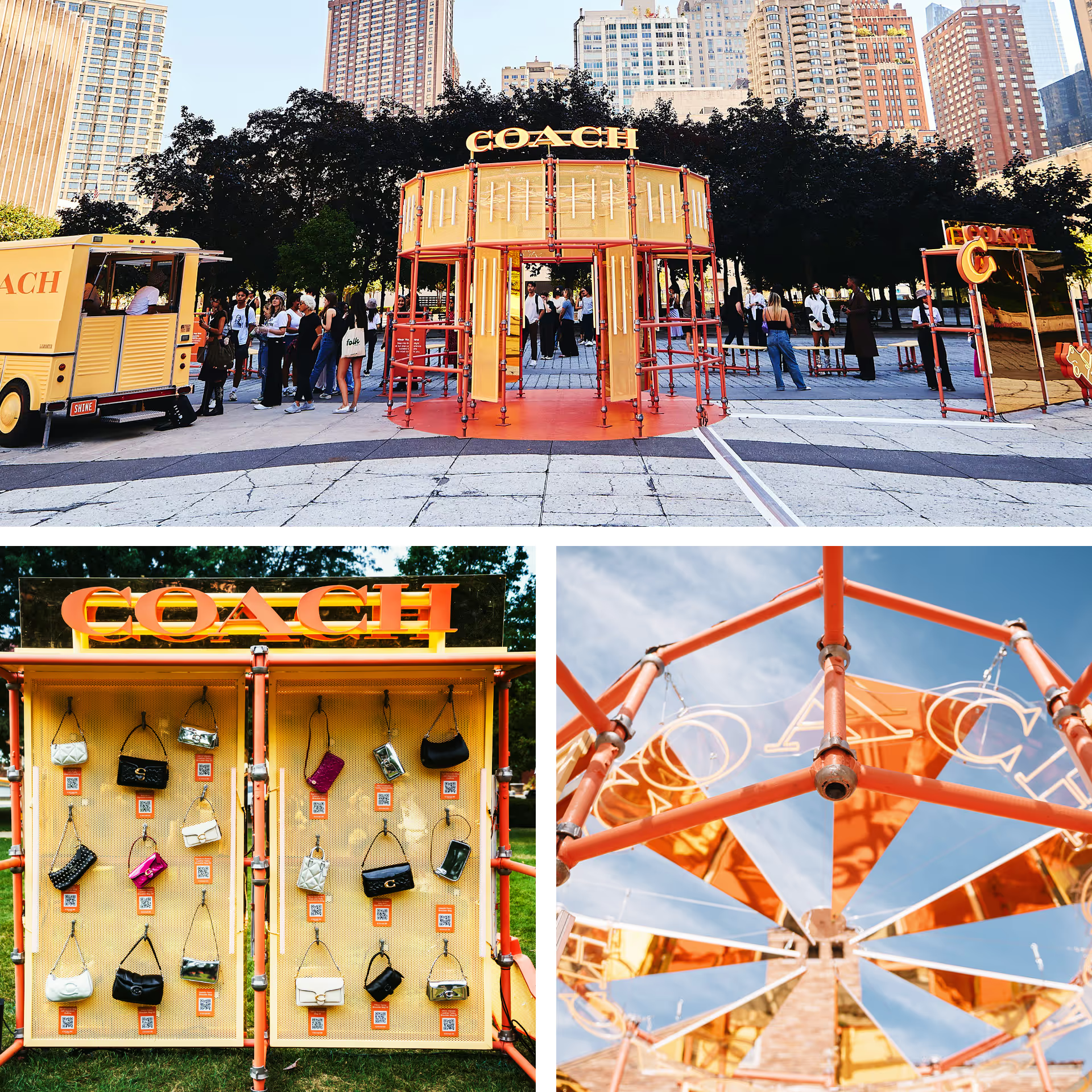
Activate executed a mobile tour for Coach's Wear Your Shine campaign, showcasing their new metallic collection across university campuses. The activation centered on a carousel-like installation featuring mirrors, vibrant lighting, and an illuminated Coach logo, built as a focal point for content creation at every stop.
Each location offered seasonal beverages topped with Coach-branded foam art and gave students direct access to Coach and Coach Outlet merchandise. Interactive photo moments, branded refreshments, and on-site shopping created touchpoints that resonated with collegiate audiences and drove organic amplification of the #WearYourShine campaign. The mirrored installation served as a natural space for content creation. The branded beverages were designed to be photographed, and the cohesive visuals maintained Coach's positioning at every campus stop.
Take Your Brand on the Road With Activate
Activate manages mobile marketing tours from the routing strategy through the final breakdown. Logistics, permitting, staffing, and on-site operations are all handled in-house. Tour elements are built in our 75,000 sq. ft. Metro Detroit facility and transported to each market. Fill out our online contact form to get started.
Frequently Asked Questions
What makes a mobile tour social media-friendly?
The physical setup should make pulling out a phone feel natural: dedicated photo opportunities, professional lighting, interactive moments, and brand visibility that reads well on screen. Content creation needs to be designed into the experience from the start, not added after the fact.
Should mobile marketing tours use paid advertising?
Paid ads targeting specific cities before arrival reach people who would not find the tour organically. Video ads using footage from previous stops consistently outperform static image ads for driving attendance.
Can influencers increase mobile tour attendance?
Local influencers with engaged audiences in tour markets drive attendance through direct recommendations to followers who match your target demographics. Tracking attendance by influencer using unique codes or links identifies which relationships are worth repeating in future markets.
How do social media activations affect mobile tour ROI?
Shareable moments and attendee-generated content extend the reach of a mobile tour beyond the people physically present at each stop. Content posted during the tour drives awareness and attendance at future stops, compounding the value of each activation.