
Building Customer Loyalty Engagement: How Brand Experiences Drive Retention
Customer loyalty engagement is about more than points and discounts. It's about creating experiences that turn occasional buyers into brand advocates. Traditional loyalty programs reward transactions, but experience-based strategies build emotional connections. Brand activations and PR boxes create these connections through personalized recognition that customers remember. When done well, this approach doesn't just retain customers—it strengthens relationships that drive long-term business growth.
Understanding Customer Loyalty Engagement
Key metrics for customer loyalty engagement include retention rates that track how many customers continue purchasing over time, lifetime value calculations that measure total customer worth, and advocacy indicators that show whether customers recommend your brand. Unlike purchase frequency, these metrics capture the depth of customer relationships and predict long-term business success.
Personalization plays a central role in modern loyalty strategies. Generic rewards programs treat all customers identically, missing opportunities to acknowledge individual preferences and purchase history. Experience-based approaches recognize that different customer segments respond to different types of engagement, allowing brands to match recognition strategies with customer value and preferences.
PR Boxes as Loyalty Recognition
Delivering Personalized Recognition at Scale
PR boxes turn loyalty rewards into something customers actually remember. These packages arrive at doorsteps as expressions of appreciation, not just promotional items. The difference is in the details—handwritten notes that address recipients by name, products chosen based on what they actually like.
Loyalty gifting programs use PR boxes to create different recognition levels that match how customers engage with a brand. Top-tier customers receive packages with premium products and packaging. Mid-tier customers get boxes that still feel thoughtful and personal. This approach recognizes different relationships without making anyone feel undervalued.
James Allen Mother's Day Loyalty Box
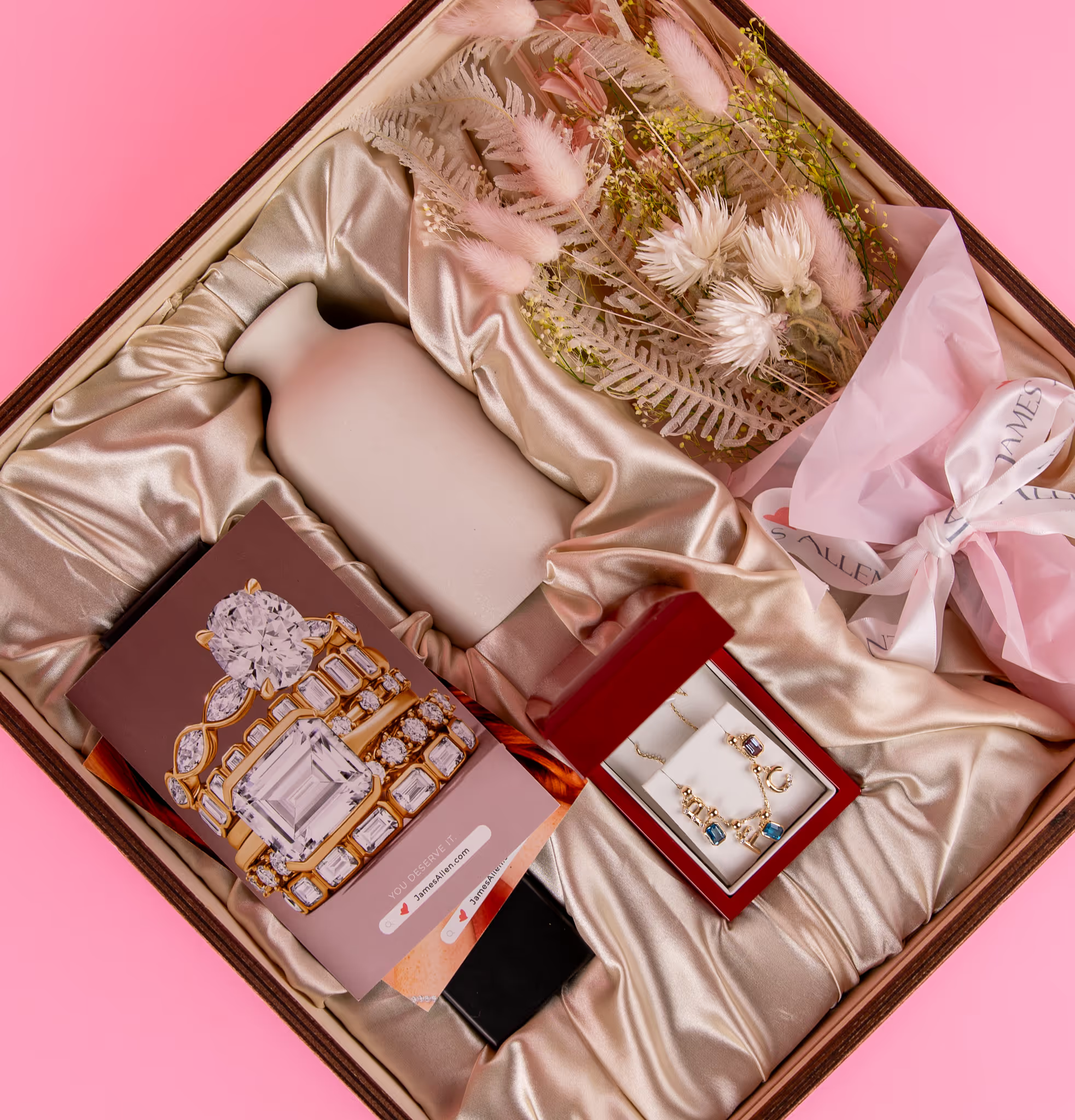
The James Allen Mother's Day loyalty box shows how details matter. The jewelry brand used premium interior packaging that made opening the box feel special from the start. A handwritten note spoke directly to the recipient: "Happy Mother's Day! Enclosed is your custom James Allen Flower Necklace..." That personal touch turned a product delivery into something more.
The box included Compartes chocolates and beauty products alongside product information, extending the experience beyond jewelry. The necklace came in a red jewelry box with tissue wrapping. Dried flowers added another layer to the presentation. Everything worked together to create something recipients would want to share.
Brand Activations for Loyal Customers
Creating Face-to-Face Engagement Opportunities
Brand activations reward customers with in-person experiences. These events turn loyalty from an abstract idea into actual moments where customers interact with brands and create memories. The experiences show customer appreciation while generating conversation that continues long after the event ends.
Tata Harper Radiance Runway
The Tata Harper Radiance Runway shows how brand activations can strengthen customer relationships through exclusive access. The skincare brand transformed New York's High Line into an experience during fashion week, starting with a preview for loyal customers that included facials and product gifts. This approach recognized existing relationships while still welcoming new customers.
Preview guests received cleanser bottles hand-painted by artist Tanu Vasu. These one-of-a-kind items became keepsakes that guests could take home—reminders of the experience and their connection to the brand.

Extending Reach While Maintaining Exclusivity
After the preview, the activation opened to the public. Anyone could stop by for facials, mocktails, information about the Radiance Collection, and samples. This structure created different levels of engagement—from quick visits to deeper interactions—letting the brand connect with people at various stages of their relationship.
The Radiance Runway included product displays where guests could touch and try products, facial stations for hands-on experience, photo opportunities, and a glow quiz that made learning about the brand interactive. Each element gave guests something to remember and share.
Customer retention benefits extend past the event itself. Customers who attend activations feel valued, which strengthens their connection to the brand. They share their experiences with others, creating word-of-mouth that traditional advertising can't replicate. This effect amplifies the activation's impact beyond who actually attended.
Measuring Customer Loyalty Engagement
Tracking Quality Over Quantity
Measuring customer loyalty engagement means tracking multiple indicators that together show how strong the relationship is. Quality matters more than quantity—one meaningful interaction often drives more value than several surface-level touchpoints. This means looking beyond simple metrics like email open rates to understand deeper customer connection.
Key performance indicators for experiential loyalty programs include how customers interact with experiences, how much time they spend engaging, and whether that engagement leads to actions like purchases or referrals. Sentiment analysis captures feedback that numbers alone miss, revealing how customers actually feel about their brand experiences.
Connecting Experiences to Business Outcomes
Brand recognition improvement shows whether loyalty experiences strengthen brand awareness and recall. Post-activation surveys measure whether participants remember the brand, understand its values, and feel more positively toward it after the experience. These metrics connect experiential investments to brand equity growth.
Social media reach and content generation provide concrete data on how experiences spread. When customers share photos from brand activations or unboxing videos of PR boxes, they extend the reach far beyond initial recipients. Tracking these shares, engagement rates, and sentiment reveals how experiences resonate.
Activate: Where Customer Loyalty Meets Experiential Impact
Activate executes customer loyalty engagement strategies through brand activations and PR boxes. The process transforms loyalty objectives into experiences that resonate with audiences and drive retention. From initial strategy through final execution, the team manages every detail—logistics, creative development, fulfillment, and performance measurement. In-house capabilities ensure quality control and customization at scale, with tiered solutions that recognize valued customers. With attention to detail and a focus on measurable results, Activate has had the opportunity to help brands strengthen relationships through PR boxes, brand activations, and personalized recognition programs. Connect with us to explore how experiential marketing can transform your loyalty program engagement strategy.
Frequently Asked Questions
What is customer loyalty engagement and how does it differ from traditional loyalty programs?
Customer loyalty engagement focuses on creating emotional connections through experiences rather than transactional rewards. Traditional loyalty programs offer points or discounts that incentivize purchases through financial benefits. Customer loyalty engagement strategies use brand activations and PR boxes to build deeper relationships. These experiences create memories and emotional attachments that drive retention beyond price-based incentives, tracking brand advocacy and lifetime value rather than simply repeat purchase frequency.
How do experiential marketing campaigns improve customer loyalty engagement?
Experiential marketing campaigns improve customer loyalty engagement by creating memorable touchpoints that strengthen brand relationships. Brand activations allow face-to-face interactions where customers experience products firsthand. PR boxes deliver personalized recognition directly to customers through thoughtful curation and customization. These experiences engage multiple senses and create stronger memory formation than digital marketing alone. When customers feel recognized through experiences, they develop emotional attachments that translate into higher retention rates and advocacy.
What types of brands benefit most from experience-based customer loyalty engagement strategies?
Brands with established customer bases seeking to deepen relationships benefit most from experience-based strategies. Companies in competitive markets use these approaches to stand out beyond product features or pricing. Industries where customer lifetime value justifies investment in personalized experiences—such as luxury goods, beauty, technology services, and consumer products—see strong returns from loyalty engagement programs.
How do you measure the success of customer loyalty engagement initiatives?
Success measurement tracks both immediate engagement and long-term relationship indicators. Direct metrics include engagement rates at brand activations, dwell time, social media shares, and content generation from experiences. Longer-term metrics track retention rate improvements, lifetime value increases, and brand advocacy indicators. Post-activation surveys measure brand recall and sentiment changes. Recaps provide analysis of performance against objectives, informing continuous refinement of loyalty strategies.
What metrics indicate strong customer loyalty engagement in experiential campaigns?
Strong customer loyalty engagement shows through multiple indicators beyond participation numbers. High dwell time at brand activations indicates genuine interest. Social media sharing and user-generated content demonstrate that experiences resonated with customers. Sentiment analysis reveals emotional connections formed during experiences. Repeat attendance at brand activations or positive response to tiered PR box programs shows customers value the recognition. These metrics together show relationship strength.
How can mobile tours strengthen customer loyalty engagement in multiple markets?
Mobile tours strengthen customer loyalty engagement by bringing brand experiences directly to customers in their markets. This approach shows commitment to meeting customers where they are rather than requiring travel to central locations. Mobile tours can target specific geographic segments with personalized experiences that acknowledge regional preferences. The face-to-face interaction opportunities create stronger connections than digital communication alone, generating local buzz and word-of-mouth advocacy within specific markets.
What role does personalization play in customer loyalty engagement programs?
Personalization shows customers they are recognized as individuals rather than transaction numbers. PR boxes with personalized elements like handwritten notes addressing recipients by name create brand moments that generic rewards cannot match. Tiered recognition systems acknowledge different customer value levels, matching experiences to individual relationships. Product curation based on customer preferences demonstrates attention to individual tastes and purchase history. This personalization transforms loyalty programs from standardized rewards into meaningful recognition that strengthens emotional connections.