
CPG Mobile Sampling Tour: Delivering Measurable Results
Mobile tours give CPG brands a direct line to consumers. A CPG mobile sampling tour puts products in shoppers' hands at festivals, retail locations, and high-traffic venues, turning passive awareness into hands-on trial.
For CPG brands, the real challenge is cutting through market noise. Deliberate routing, trained brand ambassadors, and built-in measurement turn a touring program into results across every market it visits.
Why CPG Brands Choose Mobile Tours
Mobile tours offer CPG brands several advantages for product sampling campaigns:
- Direct product trial removes purchase barriers, since consumers can experience texture, taste, scent, or performance before buying in a way no ad or shelf display can match.
- A single tour reaches multiple markets without added overhead, testing new territories and adjusting to seasonal and demographic shifts as it goes.
- Ambassadors collect real-time consumer feedback, including reactions, questions, and on-the-spot concerns or enthusiasm that shape messaging, packaging, and product development.
- Sample counts, dwell time, social reach, and conversion tracking at retail locations turn sampling activity into measurable ROI.
- Photo opportunities, hashtag campaigns, and shareable moments extend tour reach past the physical stop, multiplying impressions long after the activation wraps.
How CPG Sampling Economics Work
CPG mobile sampling works differently than other categories: the mechanics explain what separates programs that drive retail lift from ones that generate impressions without moving product.
- Trial removes the risk CPG buyers feel at shelf. Most CPG purchases are low-cost but high-frequency: a consumer who tries a $6 shampoo and likes it will repurchase it dozens of times. Brands should weigh sampling costs against that repeat-purchase revenue, not the cost of one trial unit.
- CPG sampling works best paired with immediate purchase access, since a sample without nearby retail builds awareness but delays conversion. The strongest programs time stops around retail stocking, run checkout promo codes active for 48 to 72 hours, or add point-of-sale capability at the activation. Philosophy's mobile tour coordinated with ULTA and Sephora on retail placement, so the intent created by sampling had a nearby store ready to capture it.
- Festival timing should map to category seasonality: sunscreen and hydration products at summer outdoor festivals, soup and warm beverages at fall events, school supplies and snacks near campuses during back-to-school. This alignment raises relevance, since consumers respond faster to a trial that answers a need they already feel.
- Brand ambassador quality determines trial conversion as much as reach does. The ambassador's ability to explain what a product does, how it differs from what the consumer already uses, and why the formula matters directly affects whether a trial turns into a purchase. A silent handout converts far fewer than a 30-second explanation of the product's strongest benefit.
Planning Your Mobile Tour
Initial consultations set the goals: launching products, entering new markets, driving retail sales, or building brand awareness. Those goals shape every decision that follows, from vehicle design to ambassador engagement.
Target demographics drive routing. CPG brands define ideal consumers by age, lifestyle, behavior, and location, then use that research to pick the festivals, cities, and venues with the strongest engagement.
Route planning balances demographic concentration with logistics. Festival calendars can reach thousands of consumers in a single day, and timing matters too: sunscreen samples perform best in summer heat, warm beverage sampling in fall and winter. The strongest routes put the right audience in the right place at a moment when they're already receptive.
Experience design covers how consumers notice, enter, and move through the activation. Sampling stations need a layout that avoids bottlenecks while leaving room for real conversations, and photo opportunities give consumers a reason to share the moment. Hashtag printers, digital lead capture, and QR codes turn that engagement into trackable data.
From there, concepts become detailed plans covering scope, specifications, timelines, and budgets, so every tour has a full plan in place before production begins and stays aligned with the client's vision.
Production & Preparation
Production brings the approved strategy to life. Vehicle selection matters: trailers, wrapped Airstreams, or made-to-order vehicles need to command attention and communicate brand identity, with graphics built for color accuracy and clarity across lighting conditions and viewing distances.
Sampling station layout balances speed with experience quality: good design keeps consumer flow moving and prevents bottlenecks, while storage keeps products in good condition and ready for quick restocking when crowds surge.
Brand ambassadors represent the brand at every stop, so training matters: starting conversations naturally, answering questions accurately, and carrying brand values through every interaction. They move through the venue instead of staying at the activation station, reaching people who might not approach on their own. A real conversation is the goal, not a silent handout.
Performance tracking happens in real time. Daily reports cover sample distribution, consumer interactions, and social media mentions, flagging what's working and what needs adjustment, so mid-tour refinements follow actual consumer response instead of assumptions made weeks earlier.
Philosophy Simple Not Basic Mobile Tour
Activate executed Philosophy's vision for its Purity Moisturizer launch with a summer mobile tour. The branded yellow Airstream traveled to festivals and high-traffic locations, distributing thousands of product samples to targeted consumers.
The mobile tour featured:
- A fully wrapped Airstream in Purity Moisturizer branding, creating visual impact at every stop.
- Product sampling led by trained brand ambassadors, keeping every consumer interaction high quality.
- A photo opportunity with a floral backdrop and branded beach cruisers, encouraging social sharing and user-generated content.
- Hashtag printers that gave consumers a keepsake, incentivizing posts and extending digital reach.
- Purchase incentives directing consumers to ULTA and Sephora, connecting trial to an immediate sale.
The activation delivered product experience while generating social content and driving retail conversion, showing how a single consumer interaction can pay off in more than one way for a mobile tour.

Amika Perk Up Activation
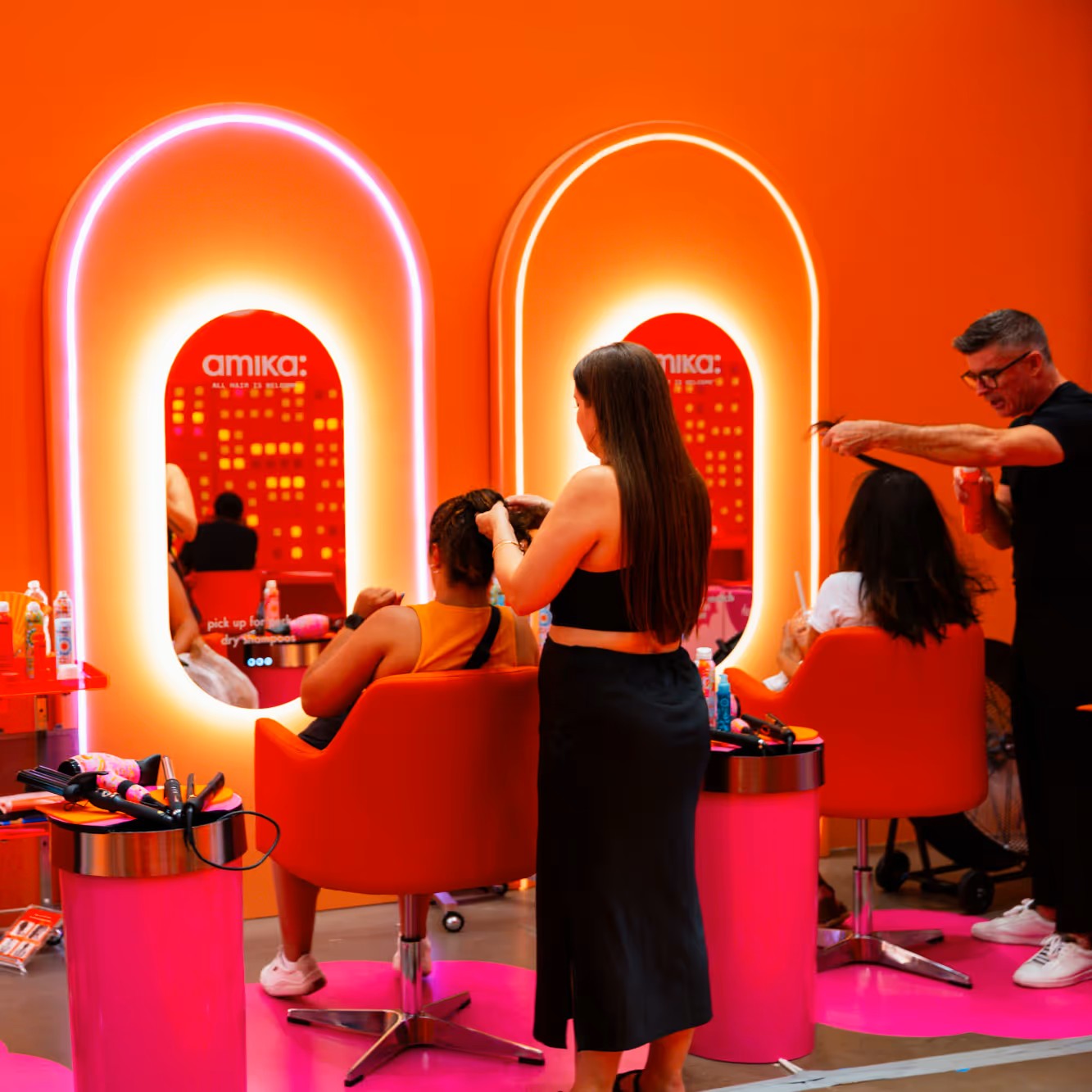
Activate executed amika's vision for its Perk Up line with an experiential activation in New York City, transforming a studio into a walk-in "Perk-Up Salon" that paired real styling services with nostalgic design.
The activation featured:
- A check-in reception where brand ambassadors set up each guest's salon appointment.
- A "Call Center" with five rotary phones and an LED switchboard, connecting guests to a "Hairapist" for advice.
- Styling stations where professional stylists applied amika's Perk Up products directly to guests' hair for live sampling.
- A color-coordinated boba bar serving drinks during the wait.
- A branded phone booth and vintage-inspired photo backdrop for capturing the finished look.
The activation paired hands-on product trial with a space guests wanted to photograph and share, turning one studio visit into product education and word-of-mouth reach.
Activate's Mobile Tour Capabilities
Activate executes mobile tours for CPG brands across multiple markets through turnkey service from strategy through execution. In-house logistics, staffing capabilities, and a 75,000 square foot facility enable tour production and management. Our team handles festival routing, retail partner integration, and social amplification strategies that transform product sampling into business results.
Connect with our team to discuss your mobile tour strategy and discover how thoughtful planning, execution, and measurement create CPG sampling campaigns that drive awareness and sales.
Frequently Asked Questions
What is a CPG mobile sampling tour?
A CPG mobile sampling tour is an experiential marketing tactic that brings product samples directly to consumers at festivals, events, and high-traffic venues. These tours use branded vehicles like trailers, Airstreams, or custom builds to create brand environments where consumers can try products and talk with brand ambassadors. Unlike a static retail demo, an experiential mobile tour reaches multiple markets by traveling to where target audiences already gather.
How do CPG mobile sampling tours generate measurable ROI?
Mobile tours generate ROI through metrics that are easy to track. Sample distribution numbers establish a cost per sample. Digital lead capture collects consumer information for follow-up marketing. Purchase incentive redemption shows immediate sales impact. Social metrics, including hashtag tracking, post volume, and engagement rate, quantify digital reach beyond the people who physically attended. Brand awareness studies measure gains in recognition. Together, these metrics connect sampling activity directly to business outcomes.
What routing strategies maximize CPG sampling tour reach?
Effective routing combines demographic research with smart logistics. Start by identifying cities with high concentrations of target consumers. Festival calendars reveal chances to reach thousands of people in a single location. Seasonal timing keeps the product relevant, and coordinating with retail locations places tours near stores when products are already stocked. The goal is reaching the right audiences at the right time, while keeping travel between stops tight.
How long does it take to plan a CPG sampling tour?
Planning timelines vary by scope, but most mobile tours take 2 to 12 weeks from consultation to launch. The process includes strategy development, route planning, vehicle production, staff training, permit acquisition, and product logistics. A simpler tour using an existing vehicle launches faster, while a custom build or a multi-market tour needs a longer lead time.
What types of CPG products work best for mobile sampling?
Products with immediate trial value perform best: skincare, beverages, food items, and household products where consumers feel the benefit right away. Products that spark a quick reaction during sampling build stronger connections, and impulse-purchase items benefit most when sampling is paired with nearby retail availability. What matters is whether consumers can understand a product's value through a brief, hands-on interaction.
How do you create shareable moments during CPG sampling tours?
Shareable moments take deliberate design. Photo opportunities with branded backdrops and props give consumers a reason to capture the moment, and hashtag printers hand out keepsakes that encourage posts. A well-branded environment that feels special earns social sharing on its own, rather than requiring a direct ask.
What permits and compliance requirements apply to CPG sampling tours?
Requirements vary by location, venue, and product type. Food and beverage sampling requires health permits and compliance with local codes. Festival participation requires vendor permits and insurance. A public-space activation needs city permits for vehicle parking and consumer engagement, and requirements can differ from stop to stop. An experienced agency handles permit acquisition across every market to keep the tour compliant.