
Building Brand Reputation Through Direct Consumer Engagement
Brand reputation determines how consumers perceive and trust companies. Reputation influences purchase decisions, customer loyalty, and business growth. Digital channels dominate marketing strategies, but experiential marketing shapes brand reputation through direct consumer engagement.
Brand activations, mobile tours, and PR boxes transform how audiences experience brands. Face-to-face interactions create moments that digital campaigns cannot replicate. When consumers interact with brands in person, they form connections that influence their perceptions and buying choices.
What Brand Reputation Means for Modern Businesses
Brand reputation is the perception consumers hold about a company based on their experiences and observations. This perception covers product quality, customer service, values, and how brands show up in public spaces. Strong reputation drives consumer trust, which leads to increased sales, customer retention, and market share.
Consumers choose brands they trust, even when competitors offer lower prices. Reputation influences both purchase decisions and customer advocacy. Satisfied consumers recommend products to their networks, which multiplies marketing reach without extra investment.
Tracking reputation impact means measuring engagement rates, social sentiment, brand exposure, and conversions. These metrics show return on investment. Companies that focus on reputation building through experiential campaigns gain competitive advantage.
Brand Activations: Creating Reputation-Building Moments
Live events shape brand perception through environments that showcase products, values, and expertise. Brand activations create spaces where every element aligns with messaging goals. These environments let brands tell their stories while giving consumers freedom to explore and engage.
Key elements that strengthen reputation through activations include:
- Consumer journey mapping that guides attendees through experiences
- Trained brand ambassadors who represent company values and answer questions
- Interactive components that encourage participation and product engagement
- Visual design that communicates brand identity through color, texture, and layout
- Technology that creates modern, engaging touchpoints
Each element shapes the impression consumers form about brand quality and credibility.
Activate executed the Hopscotch European Union Food & Wine Festivals vision across Miami, Charleston, Pebble Beach, Brooklyn, and Aspen. The team created experiences that blended tradition with modern engagement. The activation featured four interactive stations—Discovery, Demonstration, Education, and Product Wall—showcasing products from all 27 European Union countries. Real-time demonstrations, educational tablets with surveys and podcasts, and consumable giveaways created moments that established the European Union as a credible authority in food and beverage culture.
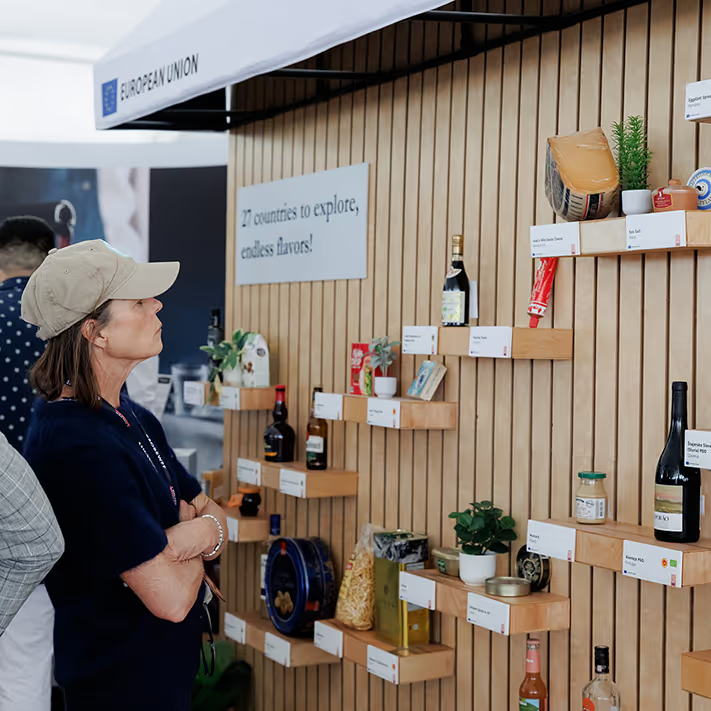
Benefits extend beyond immediate event metrics. Attendees carry their experiences into future purchase decisions, recommend brands to their networks, and maintain favorable perceptions. Brand activations create foundation moments that marketing teams reference in ongoing campaigns, reinforcing messaging while building reputation over time.
Mobile Tours: Building Brand Reputation Across Markets
Mobile tours extend brand presence beyond single locations. They bring experiences directly to consumers in their communities. This flexibility lets brands test new markets, reach different demographics, and maintain consistent messaging across regions. Each tour stop creates local buzz while contributing to national reputation through positive interactions.
Consistent representation matters for building reputation through mobile tours. Every location must deliver the same quality experience, product knowledge, and engagement opportunities. Tour managers oversee operations while brand ambassadors ensure message consistency and consumer connections. This standardization builds trust as brands deliver promised experiences regardless of location.
Measuring Brand Reputation Impact from Experiential Marketing
Measuring experiential marketing success means tracking ROI metrics that show reputation impact. The most valuable measurements include:
- Engagement rates that show how many consumers interacted with activations
- Dwell time that indicates experience quality and consumer interest
- Lead generation that connects event participation to sales
- Social sentiment analysis that reveals perception shifts
- Brand recall studies that measure how many consumers remember activation elements weeks or months later
- Conversion tracking that links experiential engagement to purchase behavior
Brand reputation drives business success through consumer trust, purchase behavior, and advocacy. Experiential marketing creates touchpoints that shape positive perception through direct engagement. Brand activations deliver experiences that demonstrate company values and product quality. Mobile tours extend reputation-building efforts across geographic markets. Measurement ensures these investments deliver quantifiable impact that justifies continued focus on face-to-face consumer connections.
What Sets Activate Apart
Activate creates experiential marketing campaigns that build brand reputation through direct engagement. We execute brand activations, mobile tours, and PR boxes for companies that need measurable business impact.
Our capabilities include everything from concept to completion. Our 75,000 sq. ft. Metro Detroit facility handles design, logistics, staffing, fabrication, and fulfillment in-house. This turnkey approach delivers consistent quality across markets.
Connect with our team to discuss how strategic experiential marketing can strengthen your brand reputation.
Frequently Asked Questions
What is brand reputation and why does it matter for marketing strategy?
Brand reputation is how consumers perceive and trust your company based on their experiences. It directly influences purchase decisions, customer loyalty, and business growth. Strong reputation drives sales and creates customer advocates who recommend your products without additional marketing investment.
How is brand reputation different from brand awareness?
Brand awareness measures whether consumers recognize your brand. Brand reputation measures how they feel about it. You can have high awareness with poor reputation, or low awareness with strong reputation. Awareness gets you noticed, but reputation determines whether consumers trust you enough to buy.
How do brand activations influence brand reputation?
Brand activations create direct experiences that shape perception. When consumers attend live events, they interact with products, talk with staff, and participate in activities. These face-to-face interactions trigger emotional responses that form lasting memories, leading consumers to view brands more favorably and recommend them to others.
What makes live events more effective for reputation building than digital campaigns?
Live events engage multiple senses while digital campaigns typically engage only sight and sound. In-person experiences create stronger memory formation through product touch, brand messaging, and social atmosphere. One quality brand activation often creates stronger perception shifts than thousands of digital impressions.
How can brands measure reputation changes from experiential marketing?
Brands track engagement rates, social sentiment analysis, brand recall studies, and conversion tracking. These metrics show how many consumers interacted with activations, how they discuss brands afterward, what they remember weeks later, and whether attendees convert to customers at higher rates than non-attendees.
What types of brands benefit most from experiential marketing for reputation building?
Brands that need to demonstrate product quality, educate consumers, or differentiate from competitors benefit most. Companies launching new products, entering new markets, or rebuilding their reputation see strong results. Fortune 1000 companies use experiential marketing to maintain market leadership and strengthen existing reputations.
How do mobile tours help brands establish reputation in new markets?
Mobile tours bring experiences directly to consumers in their communities, building local connections and trust. Each stop creates market-specific buzz while maintaining consistent brand representation. This lets brands test new territories, reach different demographics, and generate location-specific social content that resonates with regional audiences.
What role do face-to-face consumer interactions play in shaping brand reputation?
Face-to-face interactions let consumers experience brands authentically. Direct conversations with brand ambassadors allow consumers to ask questions and form personal connections. When staff represent company values well, consumers associate those positive interactions with the brand itself. These touchpoints build trust more effectively than one-way advertising.