
What Is Experiential Marketing: How Companies Use Interactive Campaigns to Build Customer Loyalty
Experiential marketing creates direct connections between brands and consumers through immersive, hands-on experiences rather than traditional advertising methods. Brands invite audiences to participate in carefully crafted moments through brand activations, mobile tours, and premium PR boxes that generate measurable business outcomes. Let's dive into the nuances of experiential marketing.
Design employee gifting programs that make your team feel genuinely appreciated while showcasing your brand's attention to quality and detail.
Defining Experiential Marketing and Its Core Concepts
Experiential marketing engages consumers through live, interactive experiences that showcase brand values and products. This strategy invites users into designed brand moments that create emotional connections and drive purchase decisions, including:
- Brand Activations: Large-scale immersive experiences like pop-ups, sponsorships, and fan events that create direct brand-to-consumer touchpoints.
- Mobile Tours: Custom vehicle experiences that bring brands to target markets through sampling programs and interactive demonstrations.
- PR Boxes: Premium unboxing experiences featuring curated products and personalized elements delivered to influential audiences.
- Interactive Exhibit: Hands-on displays that allow consumers to experience products through demonstrations and customization opportunities.
- Corporate Events: Internal experiences that strengthen company culture while delivering targeted messages to employees and stakeholders.
Build trade show experiential booths that turn casual booth visitors into excited prospects who ask for your business card before you even start your pitch.
How Experiential Marketing Differs from Traditional Advertising
Traditional marketing broadcasts one-way messages through television, print, and digital channels with limited consumer interaction. Experiential marketing strategies create two-way conversations where brands and consumers engage directly through physical experiences. This generates immediate feedback, authentic social media content, and deeper brand relationships than passive advertising methods can achieve.
The measurement differences are equally significant. While traditional campaigns focus on impressions and reach, experiential and engagement marketing campaigns track participation rates, engagement duration, and conversion metrics. This data provides actionable insights about consumer preferences and behaviors that inform marketing decisions.
Building Brand Loyalty Through Direct Engagement
Direct participation creates stronger emotional bonds between brands and consumers than passive message consumption. When people actively engage with brand experiences, they form personal connections that influence purchase decisions and advocacy behaviors. These interactions become part of participants' personal stories, generating authentic word-of-mouth marketing.
The investment consumers make through participation—whether time, attention, or physical engagement—creates psychological ownership that translates into brand preference. This emotional investment often results in a loyal customer base that values the relationship beyond product features or pricing.
Elements of Successful Experiential Marketing
Professional experiential marketing campaigns balance creative storytelling with measurable objectives to generate both participant delight and business results. The most effective programs combine audience research, planning, and flawless execution to create enjoyable experiences that advance brand goals. Key elements include:
- Audience Research: Understanding target demographics, preferences, and behaviors to inform experience design and venue selection
- Intentional Planning: Aligning campaign objectives with business goals while creating detailed execution roadmaps.
- Creative Development: Designing memorable interactions that authentically represent brand values and messaging.
- Production Management: Coordinating fabrication, logistics, and technology integration for professional execution.
- Performance Measurement: Tracking engagement metrics, social amplification, and business impact throughout campaigns.
Case Studies: Experiential Marketing Campaign Success Stories
Real-world examples show how experiential marketing generates measurable business outcomes across different industries and audience segments. These campaigns showcase various approaches to audience engagement while maintaining focus on specific brand objectives and market goals.
Large-Scale Consumer Brand Campaigns
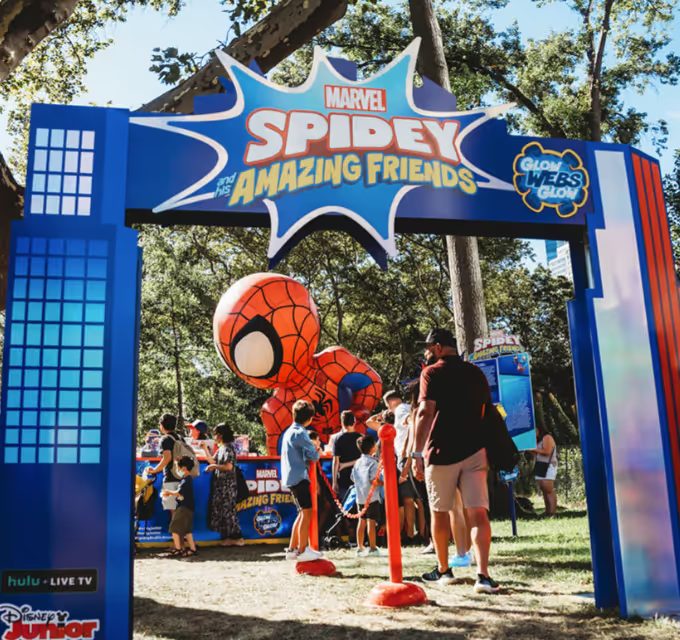
The Disney Spidey HQ activation brought animated characters to life through immersive family experiences in NYC and LA. The campaign featured custom foam-sculpted mobile headquarters with interactive cockpits, holographic character meet-and-greets, and obstacle courses designed for parent-child participation. Each zone created social-worthy moments while previewing new content and driving streaming engagement.
The activation captured the show's energy while providing entertainment value for entire families. Optical illusion photo opportunities and life-sized toy recreations generated extensive user-generated content that amplified campaign reach through organic social sharing.
B2B Professional Market Engagement
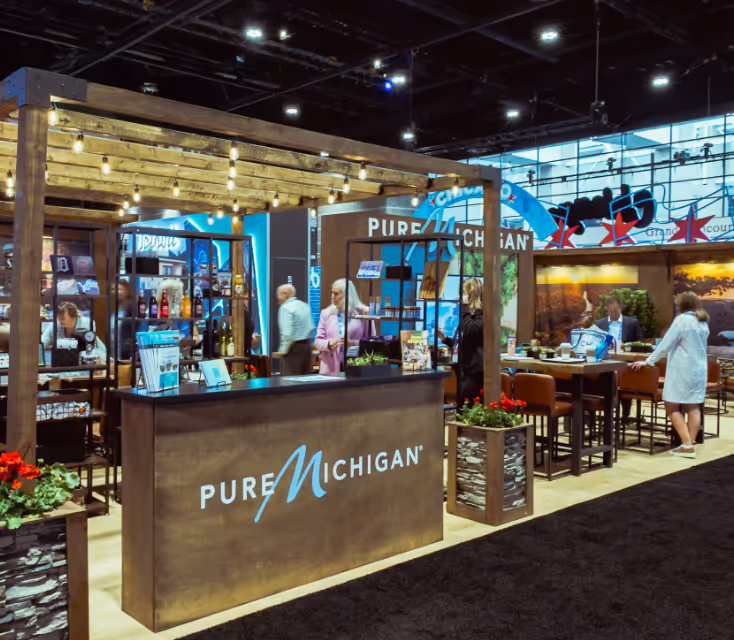
The Pure Michigan trade show activation at U.S. Travel's IPW 2025 demonstrated how B2B experiential campaigns can showcase regional opportunities through immersive environments. The modular booth featured custom woodworking that highlighted Michigan's manufacturing heritage, hospitality stations with local products, and semi-private meeting areas that facilitated meaningful business connections. The campaign balanced casual networking opportunities with focused business discussions through thoughtful space design and premium materials. The authentic representation of Michigan craftsmanship and hospitality created lasting impressions that supported tourism and business development.
Technology and Lifestyle Brand Innovation
The Meta Holiday Gifting program created personalized experiences for 30,000 clients through custom shopping platforms and curated gift selections. Recipients accessed dedicated websites where they chose from three themed collections and personalized individual items within their selections. The program supported diverse business owners while reinforcing Meta's community commitment values. Each gift category addressed different lifestyle needs while maintaining cohesive brand messaging throughout the selection and delivery process. The personalization elements created individual connections that strengthened client relationships during the competitive holiday season.

Campaign Planning and Professional Execution
Experiential campaigns need clear goals, proper venues, and teams that can handle everything from setup to breakdown without problems. Good planning prevents disasters, and experienced execution teams make events look effortless even when problems arise.
Every campaign starts with specific goals like increasing brand awareness, collecting leads, or launching a new product. From there, you need to plan the details:
- Strategic Planning: Matching your campaign concept to what you actually want to accomplish with your target audience.
- Venue Selection: Finding locations that work logistically and reach the people you want to engage.
- Experience Design: Creating participant flows that entertain people while teaching them about your brand.
- Production Coordination: Managing all the moving pieces—fabrication, staff, technology, and logistics—so everything works together.
- Risk Management: Planning for weather, safety issues, and the inevitable problems that pop up during live events.
Budget Allocation and Resource Management
Experiential marketing requires investment in design, production, event staff, venues, and any custom fabrication or technology. Your budget needs to cover everything from initial concept development through final event execution. Where you spend money affects what participants experience. Quality materials, experienced staff, and reliable technology create memorable experiences that people talk about afterward. Cutting corners on fabrication or staffing usually shows in the final result and can hurt your brand reputation.
Performance Measurement and ROI Analysis
Measuring experiential campaigns involves tracking what happened during the event and what participants did afterward. Count how many people showed up, how long they stayed, what they shared on social media, and how many gave you their contact information. The real test comes later: did participants buy something or recommend your brand? Following up with people weeks or months after an event tells you whether the experience was worth the cost. This follow-up data shows whether experiential marketing works better than your other marketing channels for acquiring customers who stick around and spend money.
Analytics and Performance Optimization
Successful experiential campaigns require tracking what actually matters: how many people showed up, how long they stayed, and what they did afterward. Measurement starts before launch and continues through execution to capture real business impact. The metrics that matter fall into five categories:
- Engagement Metrics: How many people participated, how long they stayed, and what activities they completed.
- Social Amplification: Photos and videos participants shared, hashtag usage, and how far content spread beyond the event.
- Lead Generation: Contact information collected, qualified prospects identified, and follow-up conversion rates.
- Brand Perception: Changes in brand awareness, preference, and likelihood to recommend after participation.
- Business Impact: Direct sales from events, cost per new customer, and long-term participant value compared to other marketing channels.
Social Media Integration and Content Generation
Experiential campaigns give people reasons to take photos and videos without forcing them to post for participation. The best content comes from genuine excitement, not mandatory hashtag requirements. Campaigns that create organic social content focus on Instagram-worthy moments through eye-catching visuals, interactive elements, and memorable takeaways. When participants naturally want to share their experience, that content reaches their friends and followers with authentic endorsement that paid advertising can't match.
Long-term Brand Relationship Development
People who participate in brand experiences tend to remember the company longer and buy more often than those who only see ads. They also tell friends about the experience, creating word-of-mouth referrals that cost nothing. Tracking participants after events shows whether experiential marketing actually works for your business. The best programs follow up with participants months later to see if they made purchases, recommended the brand, or engaged with future marketing. This data proves the higher cost per person compared to running digital ads.
Activate Your Brand Through Experiential Marketing
Activate specializes in brand activations, mobile tours, and premium PR boxes for global brands from our 75,000 sq. ft. facility in Metro Detroit. As a women-owned experiential marketing agency, we execute custom experiences that generate measurable business results through in-house strategy, creative development, fabrication, and fulfillment capabilities. Our experiential marketing strategy team has delivered memorable campaigns for brands like Coach, Disney, Benjamin Moore, and the Detroit Lions.
Ready to create experiential campaigns that drive real business impact? Fill out our contact form to discuss your brand's experiential marketing opportunities.
Frequently Asked Questions
What is experiential marketing and how does it differ from traditional advertising?
Experiential marketing creates live, interactive brand experiences through activations, mobile tours, and premium PR boxes. Traditional advertising broadcasts one-way messages through TV, print, and digital channels, while experiential marketing invites consumers to participate directly with brands through hands-on experiences that generate immediate feedback and authentic social content.
How do experiential marketing campaigns generate measurable business results?
Campaigns track participation rates, engagement duration, lead generation, and social media amplification to measure ROI. Professional programs connect participant interactions to downstream business outcomes like increased brand preference, customer acquisition, and lifetime value growth that often justify higher per-participant costs compared to traditional marketing methods.
Why do companies choose experiential marketing over digital advertising?
Direct participation creates stronger emotional bonds and brand loyalty than passive digital consumption. Experiential campaigns generate authentic user-generated content, immediate consumer feedback, and personal connections that translate into word-of-mouth marketing and sustained customer relationships beyond initial interactions.
Where do brands typically execute experiential marketing activations?
Brand activations occur at trade shows, festivals, retail locations, college campuses, and corporate venues. Mobile tours bring experiences directly to target markets through custom vehicles, while premium PR boxes deliver curated brand moments to influential audiences' doorsteps for maximum personalization and impact.