
Experiential Marketing Formats: Mobile Tours, Activations, and PR Boxes
Experiential marketing happens through live events, traveling tours, and physical mailers. The format depends on the goal: sampling tours get products into people's hands for trial, tradeshows put sales teams in rooms with buyers, and PR boxes deliver products to people who'll post about them. Mobile tours bring brands to target markets, pop-ups set up temporary retail, and sponsorships place brands at existing events.
The choice between experiential vs. traditional advertising depends on whether you need people to interact with your product or see your message at scale.
What Experiential Marketing Is and How It Works
Experiential marketing puts products directly in people's hands through live events, mobile programs, and physical mailers. The goal is to allow consumers to try something new, ask questions, and form their own opinions based on firsthand interaction.
Objective-Driven Design
The business goal shapes everything else. Need to increase trial in a specific market? A sampling tour gets the product to the right people. Want qualified sales leads? A tradeshow booth with demo stations generates conversations. Looking for press coverage at launch? A PR mailer lands products with the journalists who cover your category.
In-House Production and Quality Control
Fabrication shops build custom structures, allowing brands to avoid relying on generic rental equipment. Fulfillment centers pack kits with quality control checks at each stage. In-house logistics allows for faster fixes when something breaks or needs to change mid-production.
Benefits of Experiential Marketing Campaigns
Mobile tours target specific markets, trade shows generate sales leads, and PR efforts secure media coverage. Each format serves a different goal:
- Mobile Tours: Bring brands directly to target markets through planned geographic routing
- Tradeshow Activations: Connect sales teams with qualified prospects who want to have conversations
- PR Boxes: Get products into the hands of influencers and journalists who create coverage
- Product Sampling: Let people try products in contexts where they'd actually use them
- Sponsorships: Place brands in front of audiences who already showed up for something else
- Pop-Ups: Set up temporary retail in places where your customers already are
- Fan Activations: Create brand touchpoints at community events with high foot traffic
Interactive and Immersive Experiential Marketing Types
Immersive experiences place people within brand environments where they can interact with products, ask questions, and participate in activities. The structure varies based on how long the activation runs, where it happens, and what the brand needs from the interaction:
Pop-Up Installations and Temporary Retail Environments
Pop-ups are brand environments that operate in high-traffic locations for days or weeks. Location matters more than almost anything else—you need to be where your audience already is, not hope they'll find you. The space itself requires a clear path, including entry, product displays, demo areas, staff interaction zones, and takeaway stations. People should move through naturally without feeling herded or confused. Modular setups built from reusable components help keep costs down when targeting multiple markets.
Operations include securing venue partnerships, coordinating daily setup and breakdown, staffing shifts, and maintaining the space's appearance throughout the run. If you're selling products on-site, you need functioning point-of-sale systems and inventory management. You measure attendance numbers, the length of time people stay, social media tags, and sales. Post-event data shows whether pop-up visitors return to your website or make a purchase later.
Brand Stunts and High-Impact Visibility Moments
Brand stunts create shareable moments that get people talking and posting. Success depends on timing, location, and whether the idea photographs well:
- Oversized Dimensional Elements: Large-scale physical installations that become photo backgrounds and social content
- Unexpected Product Placements: Products showing up in surprising locations that make people stop and look
- Street Team Distributions: Brand ambassadors handing out products or creating interactions in high-traffic areas
- Custom Fabrication Installations: Built environments that require permits, technical staff, and on-site management
- Timing and Location Planning: Placing stunts where target audiences are, when they're most likely to engage and share
- Weather and Crowd Contingencies: Backup plans for conditions that could shut down or complicate the activation
Tradeshow Activations and B2B Engagement Formats
Tradeshows connect sales teams with people who already work in your industry. The booth needs to look professional enough to attract the right prospects while giving your team space to have actual conversations. Semi-private meeting areas let sales reps talk without shouting over the expo floor. Hospitality stations offering coffee, snacks, or drinks provide people with a reason to stop by and stay for a few minutes. Product displays show what you're selling through demos and samples, not just marketing materials.
Modular booth components built from wood, metal, and durable materials hold up across multiple events and can be reconfigured for different spaces. Lead capture systems, utilizing QR codes and digital tools, collect contact information for follow-up. Staff training makes sure everyone at the booth tells the same story about what you do.
You measure lead quality and conversion rates, not the number of people who walked past your booth.
Event-Based and Community-Driven Marketing Formats
Event marketing occurs at gatherings where your audience is already planning to be, or at standalone experiences you create from scratch. Sponsorships mean working with an existing event's schedule and audience. Launching your own event means you control the details, but you're also the one filling the room.
Sponsorships and Event Experiences
Sponsorships give your brand a presence at someone else's event. You work within the organizer's venue rules, schedule, and other sponsors:
- Interactive Zones: Spaces where attendees try products or participate in activities
- Sampling Stations: Hand out products to event-goers
- Photo Opportunities: Branded backdrops or installations designed for social posts
- Organizer Coordination: Securing setup locations and understanding restrictions
- On-Site Team Management: Staff who run the activation and handle problems during the event
- Booth Traffic Tracking: Counting visitors to your space
- Sample Distribution Numbers: Recording what was handed out and to how many people
- Social Media Monitoring: Tracking posts and mentions during the event
- Post-Event Analysis: Measuring awareness changes and purchase behavior from visitors
Product Launch Events and Exclusive Brand Experiences
Launch events build buzz around new products by giving select groups early access. Making the event feel exclusive—limited invites, first looks, VIP treatment—gets people to show up and post about it. The space typically features demo areas where people can test the product, staff who explain the features, photo setups designed for Instagram, and food or drinks that keep people around longer. The layout should guide people through naturally, not force them into a specific order.
Inviting influencers and media means the content reaches people who wouldn't have otherwise been there. Their posts and coverage continue after the event ends. These events happen fast—everything compressed into a few hours. That requires planning ahead, thoroughly training staff, conducting tech run-throughs, and having backup plans for tech failures or unexpected high attendance.
Fan and Community Engagement Activations
Fan activations are set up in parks, festivals, and public events where thousands of people cycle through over the course of days or weeks. The setup and execution require different considerations than smaller, controlled environments:
- Weatherproof Structures: Metal frames, weatherproof signage, and surfaces built to handle rain, sun, and constant use
- Game Stations: Competitions or interactive activities that draw people in
- Sample Distribution: Stations where staff hand out products
- Photo Opportunities: Branded setups designed for social posts
- Giveaway Areas: Stations where people leave with branded items
- Flexible Staffing: More people scheduled for high-traffic days, fewer for slow periods
- City Permits: Applications that can take days or months, depending on the municipality
- Crowd Safety Plans: Protocols for managing high volumes of simultaneous participants
- Accessibility Compliance: Meeting requirements that vary by location and local regulations
- Track participation numbers, social posts, and geographic coverage to measure results.
Sensory and Emotional Engagement Strategies
Experiential marketing offers a way for people to resonate with your brand when they taste a sample, touch a product, or participate in an interactive experience. Physical interaction creates memories that outlast reading a description or seeing an ad.
Product Demonstrations and Hands-On Interaction
People buy after they've touched, tested, or tried on products themselves. Technology demos are most effective when they demonstrate how a solution addresses a problem people encounter regularly. Food sampling occurs at grocery stores, cafes, or events where the food in question is relevant. Fashion needs mirrors and lighting so people can see how clothes actually look on them.
Staff should be able to answer questions without needing to refer to product manuals. The space needs room for several people to test things at once without bumping into each other or waiting around. Some people buy immediately after trying something. Others leave, think about it, and return days later to make a purchase.
Street Teams and Targeted Market Presence
Street teams hand out samples and interact with people as they pass through crowds. Location and timing determine who you reach:
- College Campuses: Students between classes, weekday afternoons
- Business Districts: Lunch hour in downtown areas pulls office workers outside
- Retail Areas: Saturday and Sunday shopping crowds
- Event Entrances: People waiting to get into concerts, games, or festivals
- Ambassador Training: How to talk about the product and when to let someone keep walking
- Sample Counts: Recording what went out and where
- Social Posts: Monitoring tags and mentions from recipients
- Awareness Shifts: Measuring if recognition increased in the area
Mobile Retail and Direct Sales
Mobile retail converts trucks or trailers into on-site stores that sell products directly to customers. You need point-of-sale systems, inventory tracking, and secure payment processing to handle transactions. Operating across multiple states means dealing with different sales tax rules. Staff need training on running transactions, handling returns, and managing cash or card payments. Inventory systems track what sells and what needs to be restocked.
Setting up near existing retail locations can be effective if you're complementing their business, rather than competing with it. Tour routes follow where demand is highest and adjust for seasons—summer products sell better in warm months, holiday items move in winter. Sales numbers show what's working. Track average purchase amounts, how many people buy versus browse, and whether customers come back to buy again
Experiential Marketing Formats in Action
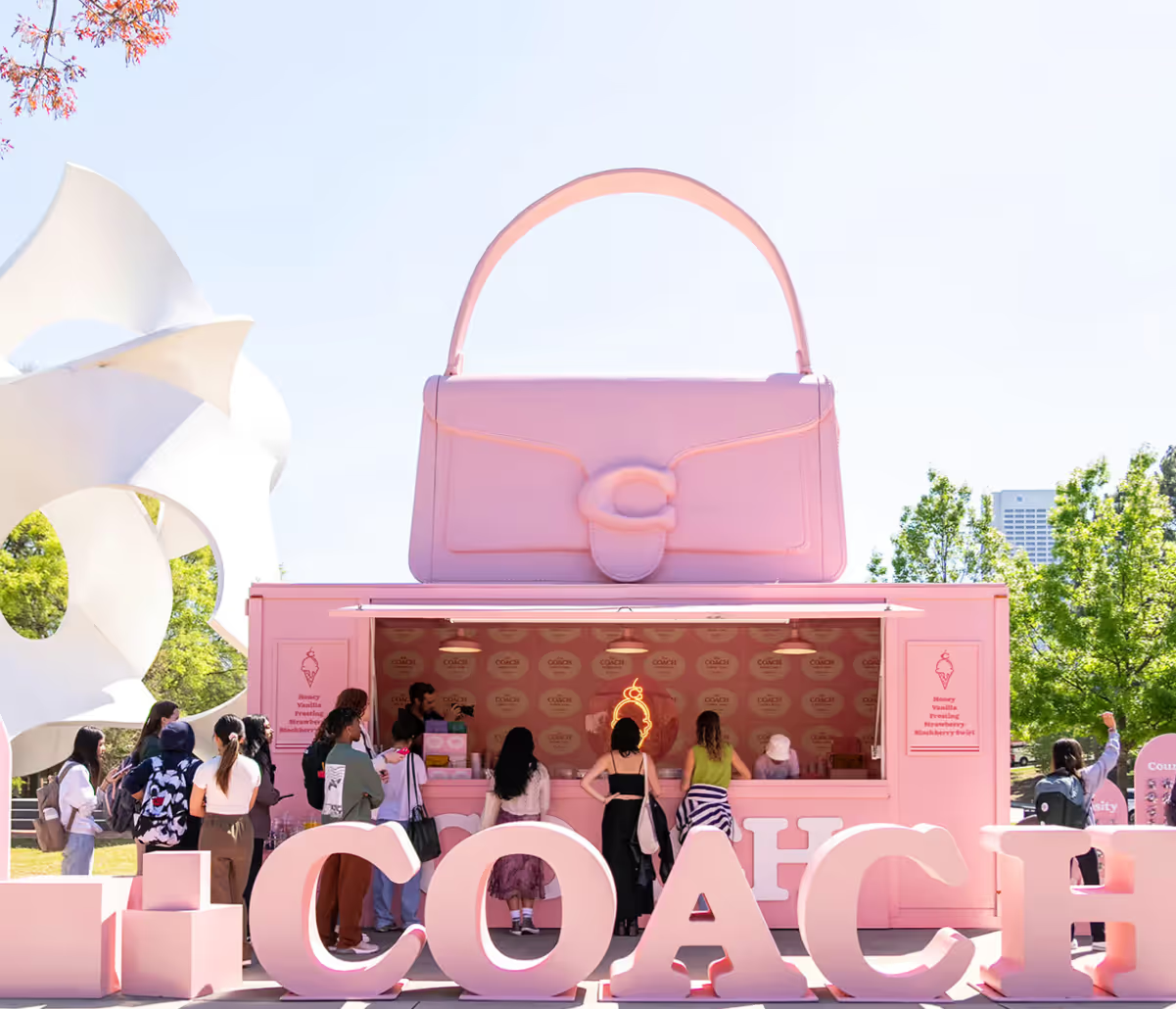
Coach used a mobile ice cream truck to showcase handbags on college campuses. Cayman Jack built a jungle lounge in an airport hotel for travelers with missed flights. Atari sent survival-themed kits to influencers for the launch of a horror game.
Coach Tabby Tour
Coach wrapped a shipping container in Tabby branding, stuck an oversized dimensional bag on top, and toured college campuses offering free ice cream:
- Digital Quiz: Students took a quiz to find their "Tabby flavor" and pick matching ice cream
- Color Coordination: Ice cream flavors, bag colors, and Little Words Project bracelets all matched
- Product Display: Arched structure where students touched and tried on actual Tabby bags while waiting
- Photo Opportunities: Oversized bag on the container roof, arch display, and ice cream setups
- Social Content: Students posted photos and tagged Coach throughout the experience
- Shipping Container Setup: A mobile structure that worked across different campus locations without complex setup requirements
- Cold Storage: Ice cream service stayed operational regardless of where the tour stopped
Cayman Jack Missed Flight Lounge
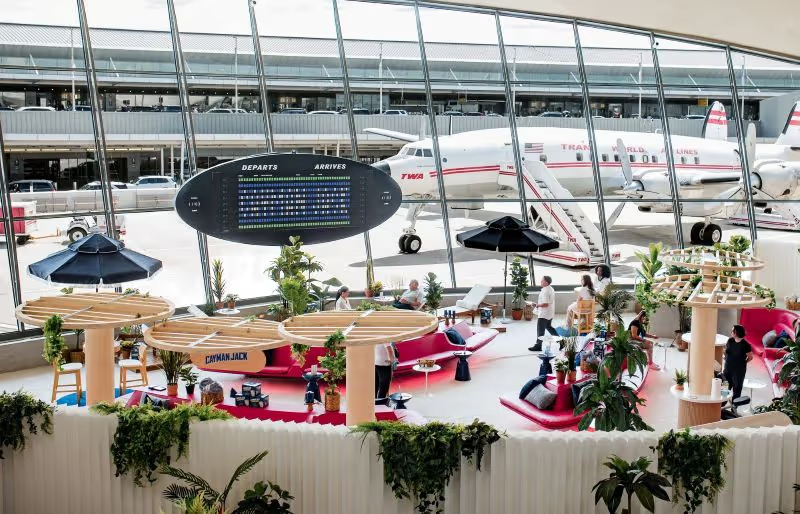
Cayman Jack set up a jungle-themed lounge at TWA Hotel near JFK Airport for travelers who missed their flights. Brand ambassadors in airport terminals handed out special boarding passes to people with delays, qualifying them for entry.
Inside, custom carpet and greenery turned the space into a jungle environment. A central photo area gave people a backdrop for social posts. The bar served Cayman Jack margaritas and appetizers.
The sunken lounge offered seating where passengers could relax between flights. Spa stations offered eye masks, face spritzes, and chair massages. As they left, people grabbed exclusive Cayman Jack merchandise to take home. The experience turned a bad travel day into something people wanted to talk about and post online.
Pure Michigan IPW Tradeshow
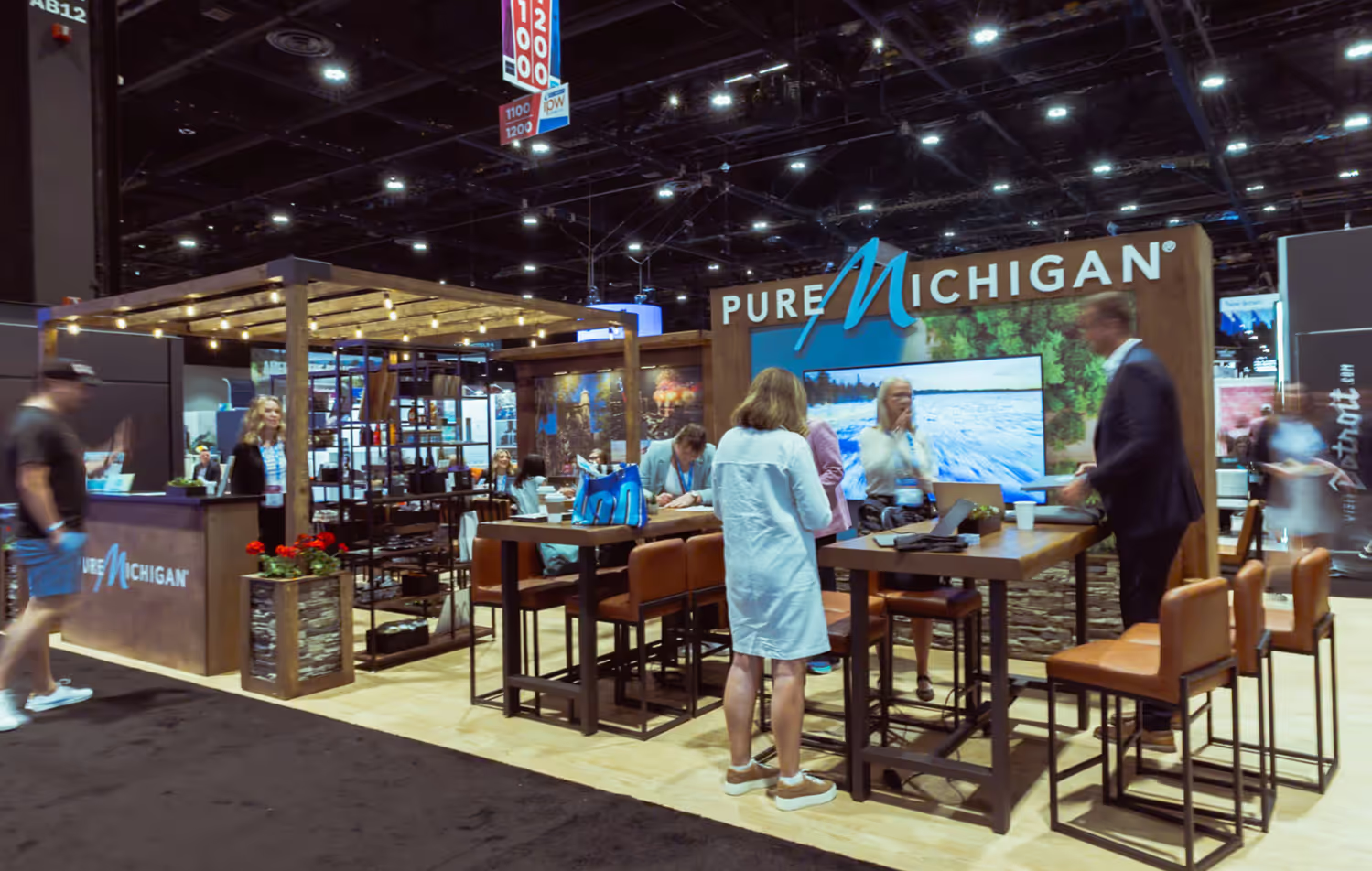
Pure Michigan built a tradeshow booth at IPW 2025 using Michigan materials—wood, metal, leather—instead of the expected lake and forest imagery:
- Custom Pergola with Planter Boxes: Semi-private meeting spaces for sales conversations away from expo floor noise
- Furniture Selection: Leather, wood, and metal pieces for comfort during longer meetings
- Dimensional Logos: Placed on both sides of the center wall for visibility from different floor angles
- Fresh Red Geraniums: Live plants in the pergola that tied into Michigan hospitality traditions
- Modular Components: Booth breaks down for shipping and reassembles at different events
- Durable Materials: Construction holds up through multiple setups without visible wear
- Design Approach: Emphasized craftsmanship and material quality instead of competing on size or technology
Build Your Next Experiential Marketing Campaign With Activate
Activate produces brand activations, mobile tours, and premium PR boxes from a 75,000-square-foot facility in Metro Detroit. In-house fabrication, fulfillment, and logistics handle custom vehicle builds, kit assembly, and event production from concept through execution. Fill out the contact form to get started.
Frequently Asked Questions
What types of experiential marketing formats work best for product launches?
Product launches benefit from formats that create exclusivity and generate immediate social coverage. PR boxes place products with influencers who create unboxing content, while launch events bring media and key customers together for hands-on product demos and photo opportunities that drive early buzz.
How do mobile tours differ from traditional brand activations?
Mobile tours bring brands directly to target markets through custom vehicles that travel to multiple locations over weeks or months. Brand activations typically happen in fixed locations for shorter periods, using pop-ups, sponsorships, or event installations to create immersive environments where specific audiences already gather.
Which experiential marketing formats generate the most social media content?
Formats with built-in photo opportunities and shareable moments generate the most social content. Brand stunts with oversized dimensional elements, pop-ups with Instagram-worthy backdrops, and PR boxes with premium unboxing experiences all encourage recipients and attendees to post, creating organic reach beyond the physical activation.
Can experiential marketing campaigns work for B2B companies?
B2B experiential campaigns work through tradeshow activations, mobile tours targeting business audiences, and corporate gifting programs. Tradeshows connect sales teams with qualified prospects through demo stations and meeting spaces, while mobile B2B engagements bring products directly to client locations for hands-on demonstrations.
Why do brands use PR boxes instead of traditional advertising?
PR boxes place physical products directly into the hands of influencers, journalists, and media contacts who create authentic content about them. The format generates organic social coverage and press mentions through curated unboxing experiences that feel personal rather than promotional, reaching audiences who trust the content creator's perspective.
Where should brands host experiential marketing activations for maximum impact?
Location depends on your target audience and campaign goals. College tours reach students on campuses, sponsorships tap into existing event crowds, street teams intercept high-traffic areas, and pop-ups set up in retail corridors where shoppers already browse—each format works best where your specific audience naturally gathers.
Will this approach work for B2B companies?
Activate designs activations for B2B audiences including trade shows, executive events, and corporate gifting programs. Strong branding and experiential elements that Activate curates help clients stand out in competitive B2B environments.