
Credit Card Reward Fulfillment for Rewards Programs
Credit card companies understand that points sitting unused don't build loyalty. Cardholders accumulate rewards, but catalogs don't always inspire redemption. Experience-based fulfillment turns reward programs into tangible reminders of card value.
Financial institutions use tiered PR packages to acknowledge spending levels and cardholder status. Packaging, product selection, and delivery timing turn reward redemption from transaction to brand experience.
From Points Accumulation to Experience Delivery
Early reward programs centered on airline miles—spend money, earn points, book travel. Straightforward for frequent flyers. But most cardholders accumulated points without clear redemption paths. Financial institutions added merchandise catalogs, gift cards, and statement credits for flexibility, yet these options didn't create tangible value.
Experience-based fulfillment changes the equation. Consider this: a Delta Reserve cardholder receives a travel kit that reflects their lifestyle and spending patterns. The package arrives at their program anniversary, reinforcing the connection between card activity and rewards. This approach requires operations that manage tier-specific product selection, personalization, and delivery timing across thousands of cardholders. Programs that execute fulfillment this way transform reward redemption from a transaction into a relationship touchpoint.
Credit card reward programs use local brand partnerships to source region-specific products that reflect cardholder demographics and spending patterns.
Processing Reward Data Through Fulfillment Operations
Credit card rewards programs generate data that drives fulfillment execution. Companies track cardholder tier status, spending thresholds, and redemption eligibility. Fulfillment operations receive this data to determine package assignments, personalization details, and shipping destinations. The handoff between financial institutions and fulfillment teams requires secure data transfer. A tiered program sends files with thousands of recipients, each assigned to a specific package level with details like names or account anniversaries. Fulfillment teams use this data to pull components, apply customization, and route shipments.
Inventory systems track component availability across variations. When a program includes three-tier levels with different products in each, you need visibility into stock levels to prevent delays or substitutions. Data security matters here. Financial institutions don't hand over cardholder information without verification that fulfillment partners can protect it. Systems need encryption, access controls, and audit trails showing who touched what data when.
Managing Quality Across Program Economics
Experiential rewards programs balance perceived value against budget realities. Financial institutions select components that deliver experiences while controlling production costs per recipient. Tiered structures manage expenses across cardholder segments. Top spenders receive higher-budget packages with items reflecting their status. Entry-level tiers use component selection to control costs while maintaining delivery standards. Enterprise clients running programs at scale need fulfillment operations that source products, manage inventory, and execute assembly while keeping per-unit costs consistent. Personalization requirements, international shipping, and delivery timelines add complexity that affects program economics.
Product sourcing determines whether programs hit budget targets. A travel kit might include a leather passport holder, luggage tag, and packing cubes. Sourcing these items from manufacturers who can deliver at volume affects per-unit costs. Fulfillment partners negotiate pricing based on order quantities, then warehouse components until assembly begins. Quality control happens during assembly. Teams inspect components before packing, verify correct items go into each tier variation, and check personalization accuracy. One misrouted package or wrong name spelling affects how cardholders perceive their reward program.
Media packages for experiential marketing deliver branded materials, product samples, and event credentials to journalists covering brand activations.
Travel-Themed Packages for Premium Cardholders
Travel credit cards attract cardholders who prioritize experiences over merchandise. Booking discounts and lounge access matter, but packages reinforce the travel lifestyle between redemption cycles. Travel kits include luggage tags, passport holders, packing cubes, or destination-specific items that connect to cardholder interests. A cardholder who books European trips receives different items than someone who flies domestically for business. Sourcing products that match card positioning while coordinating delivery timing around travel patterns or program milestones requires execution that considers multiple variables.
Programs like Delta SkyMiles Reserve use tiered gifting to acknowledge top spenders with packages reflecting their status. Higher-tier cardholders receive more items, upgraded packaging, and rewards that reinforce card value. These programs require fulfillment operations that manage multiple kit variations, apply tier-specific customization, and maintain standards across thousands of recipients.
Delta SkyMiles Reserve American Express Cardholder Gifting
Delta and American Express designed a tiered gifting program for SkyMiles Reserve cardholders based on annual spend levels. Each tier received different components, with top spenders accessing items reflecting their program status. Packaging used Delta's brand colors and materials to match card positioning. The fulfillment operation processed data files identifying qualified cardmembers, assigned them to specific tiers, and routed packages to addresses. Name customization appeared on packaging and materials, while tier-specific messaging acknowledged cardholder status.
Assembly operations managed multiple variations simultaneously, ensuring each tier maintained standards while differentiating the unboxing experience. Delivery timing coordinated around program milestones. Packages arrived when cardholders hit spending thresholds or anniversary dates, reinforcing the connection between card activity and rewards received.
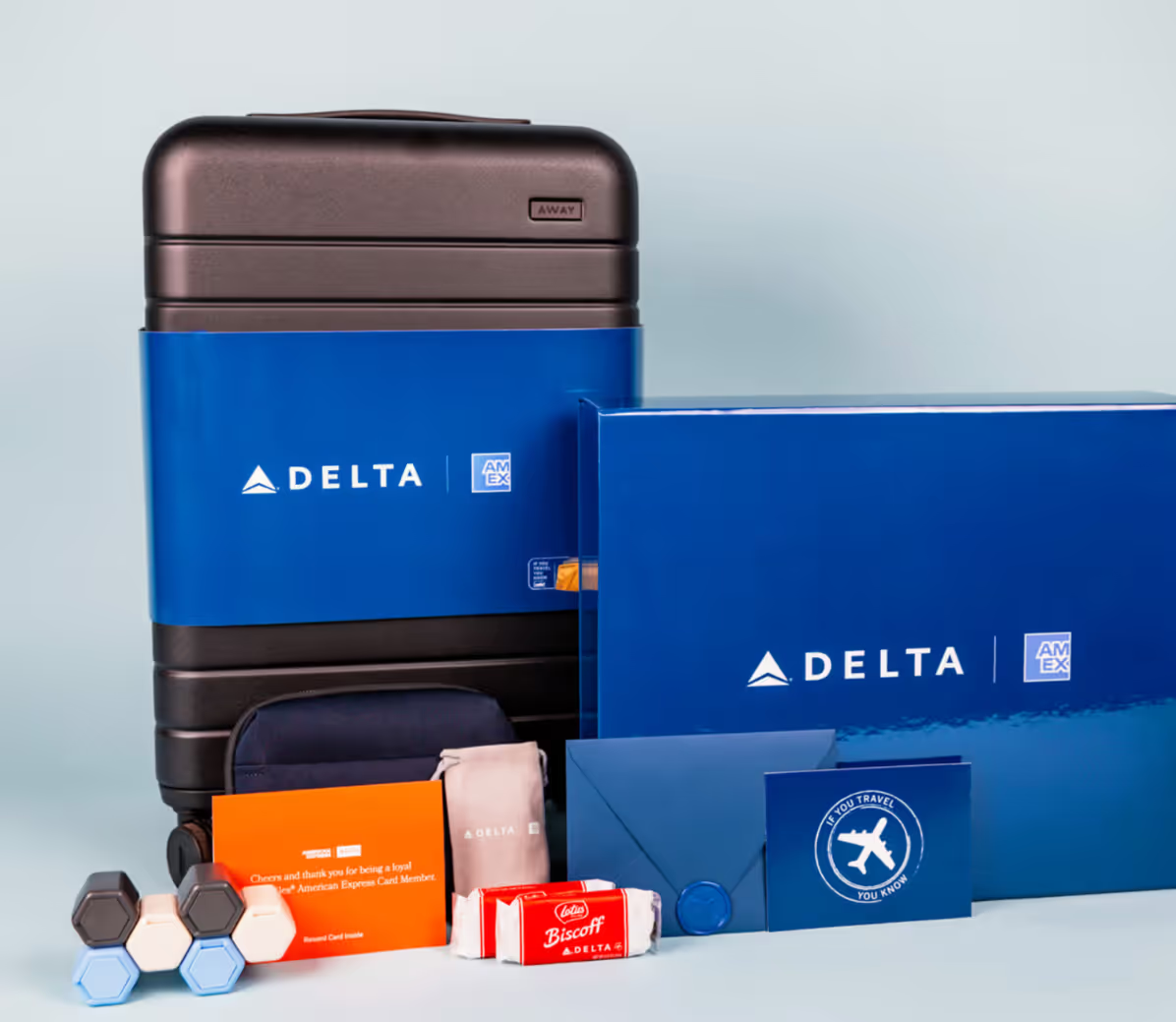
Activate: Credit Card Reward Fulfillment Operations
Activate executes experience kit programs for financial institutions running tiered credit card reward programs. Our Metro Detroit facility handles packaging design, product sourcing, kit assembly, and distribution for credit card loyalty programs. We built our 75,000 sq ft operation to deliver the precision these programs demand—from cardholder gifting to corporate recognition packages. Connect with our team to discuss credit card reward fulfillment for your program.
Frequently Asked Questions
How does experience-based reward fulfillment differ from catalog redemption?
Experience-based fulfillment delivers packages based on tier status without requiring cardholders to browse catalogs. Catalog redemption requires cardholders to log in, browse options, and place orders—adding friction to the redemption process.
What makes tiered reward fulfillment operationally complex?
Tiered programs require different components for each cardholder segment, with separate inventory tracking and assembly workflows. Managing three tiers means tracking inventory for three different component sets while applying individual customization across thousands of packages.
How do fulfillment operations handle personalization at scale?
Personalization includes names on packaging, customized messages, and tier-specific products applied during assembly. Print-on-demand technology applies names to packaging materials, while assembly teams follow tier-specific instructions for each recipient.
What fulfillment capabilities do rewards programs require?
Programs need packaging capabilities, product sourcing, secure data handling, and distribution networks. Data security protects cardholder information throughout the fulfillment process.
How does packaging quality affect reward program perception?
Packaging communicates program value before cardholders see the contents. Materials reinforce card positioning and set expectations for what's inside.