
Strategies for Consistent Brand Messaging
Consistent brand messaging keeps your company's story, voice, and values aligned across every channel and touchpoint. When live events, PR boxes, mobile tours, and digital content all reflect the same identity, audiences recognize your brand instantly and understand what you deliver.
Building Your Brand Message Foundation
Branding consistency begins with defining your identity, voice, and visual standards before you create anything. Without documented guidelines, your activations and campaigns will communicate different messages depending on who's working on them.
Defining Brand Identity and Core Values
Brand identity separates your company from competitors and guides every production decision. Document these elements before you start building anything:
- Selling Points: What your business delivers, not aspirational claims that sound good in presentations but don't match your capabilities.
- Problems You Solve: The specific issues your services address for clients, written in concrete terms that connect to real scenarios your team encounters.
- Target Audiences: Who you serve and what they need from activations, tours, or mailers so you can tailor experiences without changing your core identity.
- Core Values in Production: How your values translate to material specs, fulfillment processes, and fabrication choices—a sustainability-focused brand can't ship PR boxes wrapped in excessive plastic, and a precision-focused company will spec different tour materials than one prioritizing speed.
Activation risk mitigation starts with checking samples against brand specs before you build 50 identical installations—one wrong color code multiplies across every market.
Creating Your Voice and Messaging Standards
Brand voice is how your company sounds in writing and conversation—the words you use, the ones you avoid, and the tone that comes through in every piece of content. Document this so your social media posts sound like the same company that wrote your event signage and proposal decks.
Messaging standards organize what you say into one primary statement and a few supporting points that address different services or audiences. Each point should reinforce the main message, not contradict it. Write down your framework with real examples of approved and rejected phrasing so team members can make consistent choices when writing kit inserts, training brand ambassadors, or drafting client communications.
When planning branded hashtag activations, create photo moments with your logo and colors built into the installation so attendees naturally share on-brand content without being told what to post.
Visual Specifications for Experiential Work
Brand guidelines document your visual standards, messaging rules, and production specs in one place. Write down logo sizing, color codes, typography, and approved photography styles so teams stop guessing.
For experiential work, guidelines need to cover physical applications—signage materials, structural finishes, dimensional logos, and how branding appears on vehicles, boxes, and event installations. Include minimum sizes, prohibited alterations, and material specifications. Add grammar rules, approved terminology, and examples of how to reference clients or describe services. Update the brand messages document when you add capabilities or refine your positioning so it stays useful.
Executing Brand Activations With Unified Messaging
Pop-ups, mobile tours, and PR mailers deliver your brand story through physical experiences. Design teams, fabricators, fulfillment operations, and event staff all need to work from the same guidelines, or the message falls apart between concept and execution.
Aligning Live Events With Social Media
Activations generate social media content the moment attendees start taking photos. Design consistent branding with that in mind:
- Photo-Ready Installations: Dimensional logos, bold graphics, and branded backdrops that communicate your identity in photos without requiring captions or explanation.
- Pre-Event Content Alignment: If your Instagram account shows custom fabrication work, the activation needs to demonstrate it—don't promote capabilities you won't display.
- Consistent Event Voice: Social media posts during activations should match your established brand voice, not shift to hype-filled language that sounds like a different company took over your account.
- Deliver What You Promise: Interactive demos, product features, or experiences mentioned in pre-event promotion need to appear at the activation.
Training Staff on Brand Messaging
Brand ambassadors and event staff talk to audiences face-to-face, so they need to communicate the same messages as your written materials. Give them talking points that match your marketing content without sounding like they're reading a script.
Run practice conversations before events so staff can answer questions using brand voice naturally. If your marketing emphasizes custom fabrication, staff should be able to explain what that means in real terms. If claims about in-house capabilities appear in your ads, the team working the activation needs to back those up with specifics, not vague answers that contradict what you publish elsewhere.
Maintaining Brand Consistency Across Campaigns
Campaigns that include PR boxes, live events, and digital ads need to look and sound like the same company produced them. Write down which elements stay fixed—logo usage, brand voice, color palette—and which can adapt based on audience or format.
PR boxes give you complete control over the experience. Every detail matters—packaging materials, product choices, printed inserts. If your brand claims sustainability, don't ship boxes wrapped in three layers of plastic. If your marketing talks about custom work, the box needs to show it through personalized elements or unique designs, not generic items anyone could order in bulk.
Managing Brand Standards Through Production and Delivery
Packing 5,000 PR boxes or building installations for a 20-city tour involves dozens of team members across design, fabrication, and fulfillment. Quality checks at each production stage catch mistakes before they ship or go on-site.
Implementing Quality Controls for Team Members
Quality controls catch brand inconsistencies before they reach audiences. Build these checkpoints into your production process:
- Guidelines Access and Training: Give designers, fabricators, and fulfillment staff current brand guidelines and train them on which elements stay fixed and where they have flexibility.
- Pre-Production Reviews: Check signage proofs, kit samples, and vehicle wraps against brand specs before full production runs—catching a wrong logo size or off-brand color on a sample costs less than reprinting 3,000 boxes.
- Approval Checkpoints: Designate who reviews materials at each production stage so brand deviations get caught when corrections are still affordable, not after a tour vehicle is wrapped or kits are packed.
Conducting Regular Audits of Brand Elements
Conduct regular audits quarterly. Review recent activations, social media posts, and PR materials against your brand guidelines to identify where things deviate from specification—incorrect logo versions, inconsistent tone, unauthorized color variations.
Look at event photos to see if installations displayed branding correctly. Read through social media accounts to catch tone shifts. Pull samples from recent kit shipments to verify they match specs. Inconsistencies usually show up during rush jobs when teams skip approvals or at handoffs between departments. When you find patterns, update your guidelines to fix the gaps that caused the problem.
Adapting Messaging Across Audience Segments
B2B clients evaluating agencies need to hear about production capabilities and turnaround times. Event attendees at a sampling tour care about the product, not your fabrication shop. Adjust what you emphasize without altering your tone.
Your Instagram account can focus on visual work while discovery calls cover logistics and operations. A PR box for influencers might highlight the unboxing experience, while corporate gifting emphasizes customization options. Different focuses, same brand voice. Test what works with each audience and adjust, but don't rewrite your entire message every time you target a new segment.
Consistent Messaging Across Real Campaigns
Keeping brand messaging aligned across activations, tours, and mailers takes more than good intentions. Here's what it looked like for two campaigns:
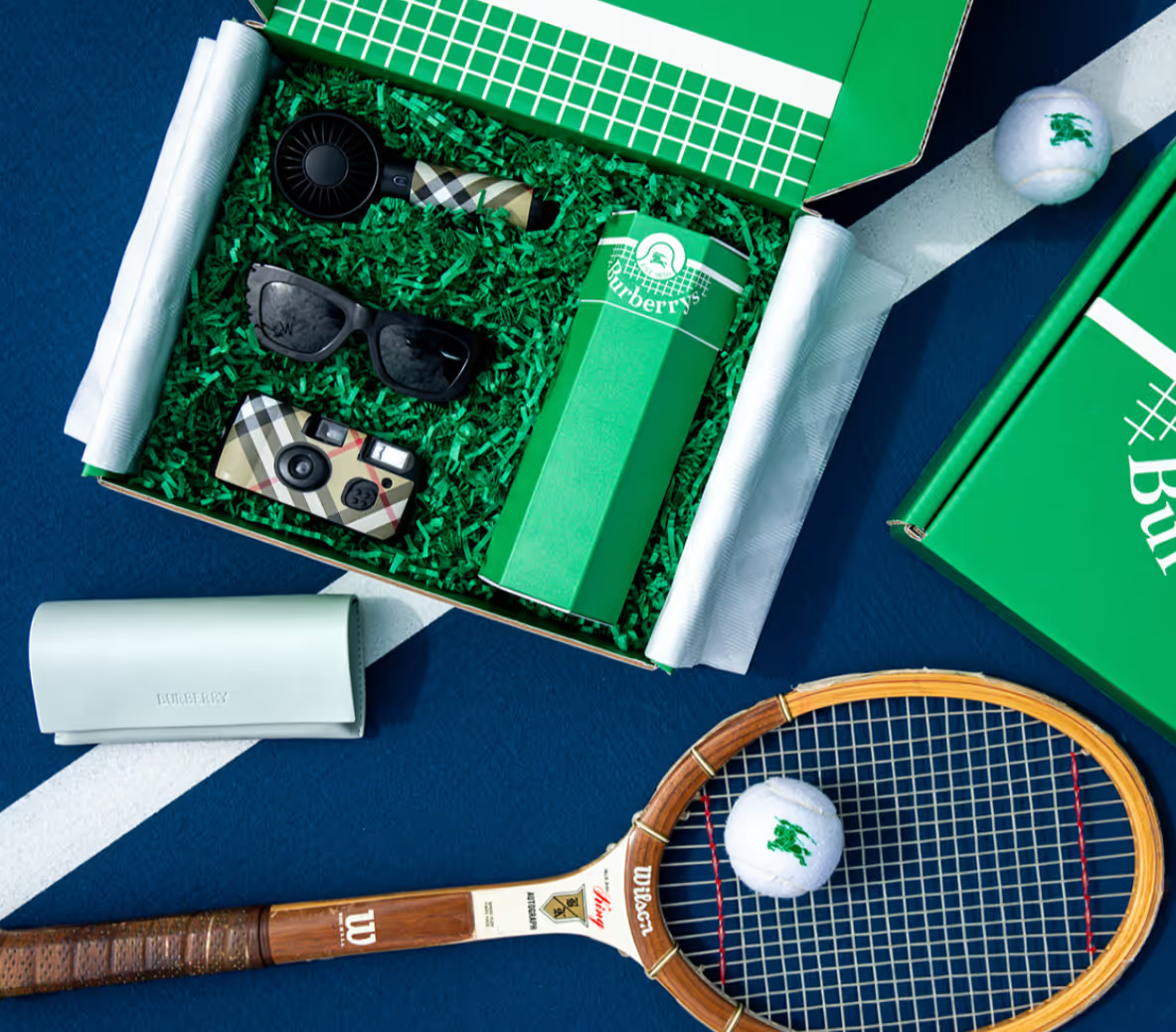
- Burberry US Open Kits: Luxury brands can't afford mixed signals. Every item in these PR boxes—from the sunglasses to the custom tennis balls to the disposable camera—featured Burberry's plaid pattern and classic colorways. The printed invitation matched the sophisticated tone the brand uses everywhere else, not some overeager event voice.
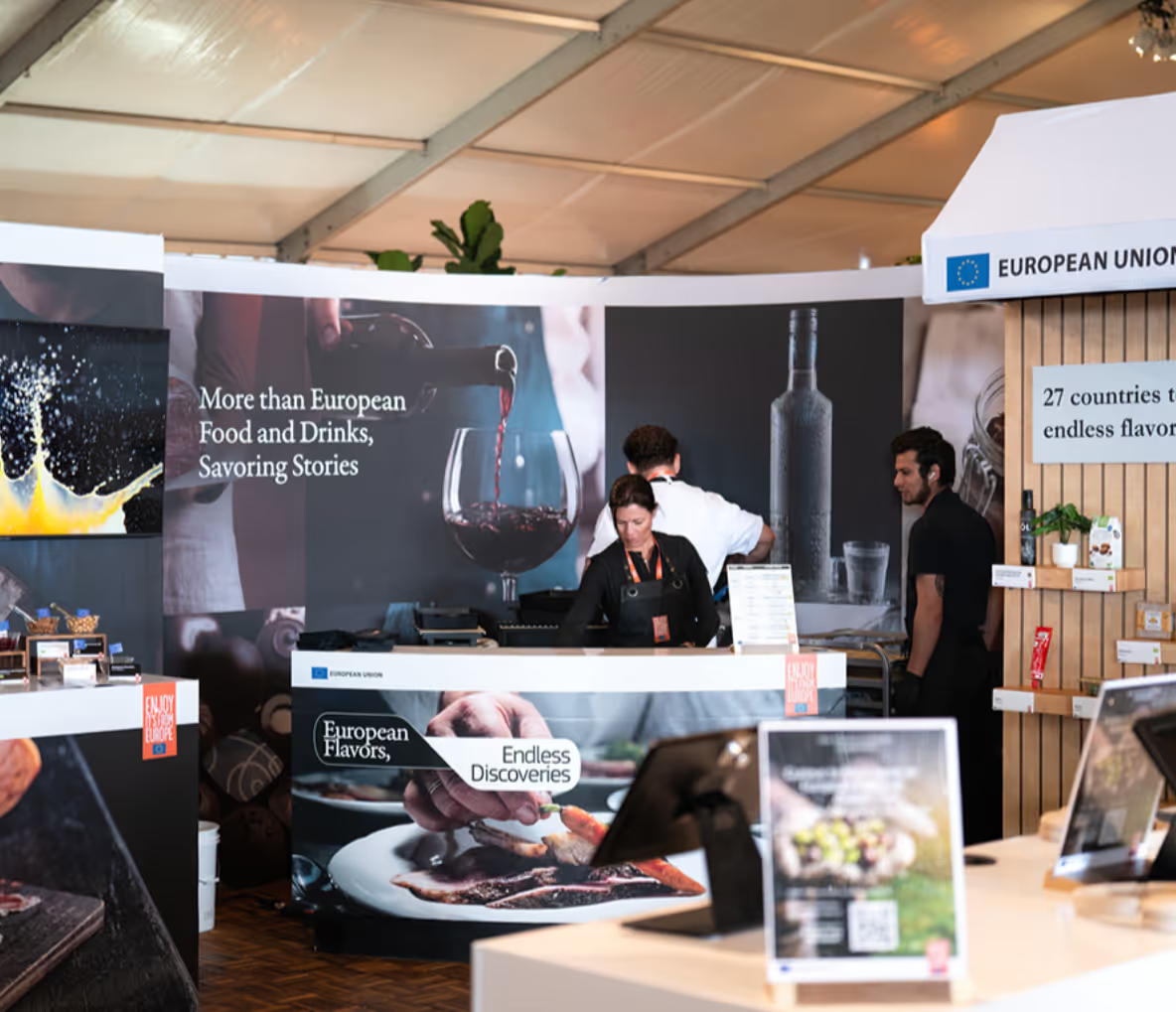
- EU Food & Wine Festivals: Five cities, four interactive stations per event, 27 EU countries represented. The booth design, educational tablets, product displays, and demo station messaging stayed consistent across Miami, Charleston, Pebble Beach, Brooklyn, and Aspen so attendees got the same European culinary story no matter which festival they visited.
Build Consistent Experiences With Activate
Activate produces brand activations, mobile tours, and PR boxes from our 75,000 sq. ft. facility in Metro Detroit. We handle strategy, fabrication, fulfillment, and logistics to keep your brand consistent across every activation. Fill out our contact form to start the conversation about your next campaign.
Frequently Asked Questions
What is consistent brand messaging?
Consistent brand messaging is the practice of communicating the same core values, voice, and identity across all marketing channels and customer touchpoints. This approach ensures audiences receive unified brand stories whether they encounter your company through live events, PR boxes, mobile tours, or digital platforms.
How does consistent brand messaging improve customer experience?
Consistent brand messaging improves customer experience by eliminating confusion and building recognition across every interaction with your brand. When event attendees, kit recipients, and social media followers encounter the same visual elements and brand voice, they develop stronger connections and trust in what your company delivers.
Why is brand consistency important in experiential marketing?
Brand consistency in experiential marketing creates recognizable experiences that audiences remember long after events end. Live activations, mobile tours, and PR mailers that align with established brand guidelines reinforce messaging from other marketing communications rather than introducing conflicting narratives.
How do you maintain consistent messaging across multiple campaigns?
Maintaining consistent messaging across multiple campaigns requires documented brand guidelines, trained team members, and quality controls throughout production and delivery. Campaign-specific materials should reference a central messaging framework that defines core elements while allowing flexibility for different audiences and activation formats.
What are brand guidelines and why do they matter?
Brand guidelines are documented standards that define visual elements, brand voice, and messaging frameworks your company uses across all marketing materials. These guidelines help production teams, content creators, and brand ambassadors maintain consistent identity whether executing tradeshows, fulfilling custom kits, or managing mobile tour activations.
How often should you conduct brand audits?
Brand audits should occur quarterly to assess whether recent activations, social media posts, and customer touchpoints align with documented brand standards. Regular audits identify inconsistencies in visual elements, messaging, or customer experience before they become entrenched patterns that weaken brand recognition.