
How Experiential Marketing Supports Celebrity Endorsements
Celebrity endorsement marketing pairs a celebrity endorser with a brand to promote products or services, usually through a paid contract covering social posts, appearances, or campaign features. Experiential marketing gives that arrangement a live setting: fans meet the celebrity, try the product, and share the moment themselves. Mobile Tours, pop-up events, and product launches move celebrity partnerships from passive viewing to active participation that drives measurable results and brand visibility.
How Celebrity Brand Partnerships Work
Celebrity endorsements go back further than most people assume: George Burns and Jack Benny read sponsor spots on live radio decades before John Wayne and Ronald Reagan did the same for print and TV ads. Now brands build live experiences around a celebrity: pop-up shops, Mobile Tours, product launches, and PR packages a celebrity unboxes and shares with followers.
Celebrity Endorsements Go Digital
Social media gave celebrities a direct channel to their audience, so endorsements no longer need a network ad slot to reach millions of people. Posts on Instagram and TikTok read as more personal and less scripted than a traditional commercial. A live activation adds a second layer on top of that reach, giving fans an in-person moment to reference in every post that follows.
Partnership Types: Beyond Basic Advertising
Celebrity partnerships now extend well past paid ads and span several formats:
- Social Media Content: Celebrities post about products on their own accounts, so endorsements read as personal recommendations rather than ads
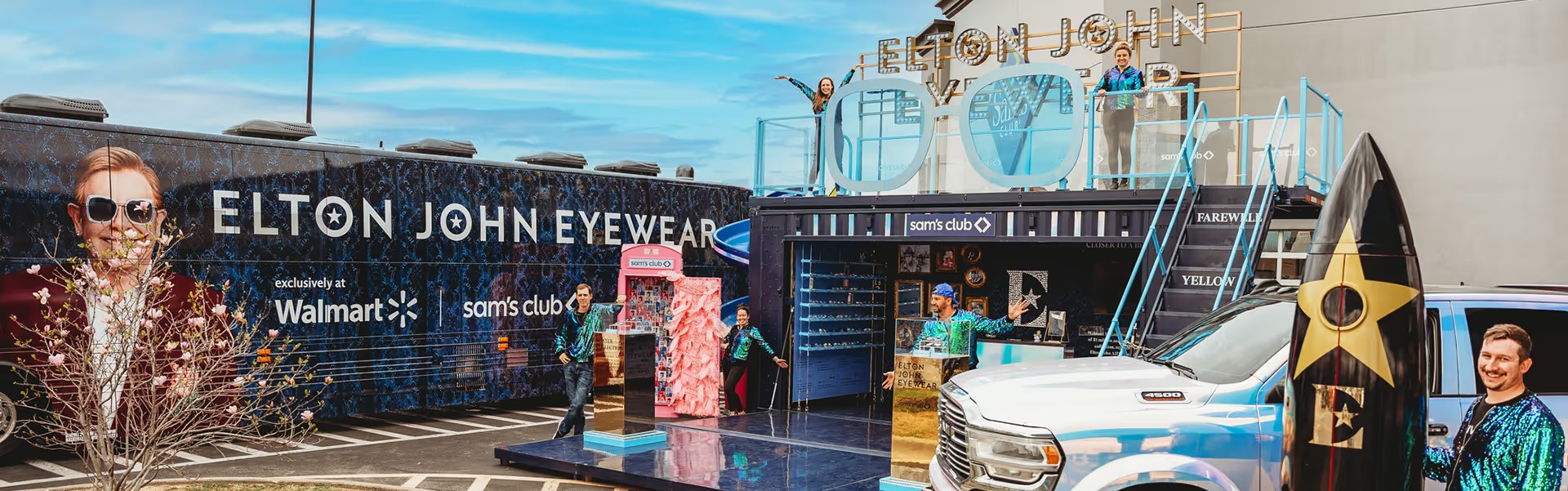
- Mobile Tour Appearances: Celebrities travel to multiple cities for branded experiences, bringing the product directly to fans in each market
- Pop-Up Events: Celebrities appear at temporary installations where fans can meet them and try the product firsthand. Hot Topic used this format to introduce actress Xochitl Gomez as its Chief Style Officer (see case study below)
- Premium PR Campaigns: PR boxes sent to celebrities, who share unboxing moments with their own followers
- Product Launch Events: Exclusive reveals where a celebrity introduces a new product or collection to media and VIP guests. Hot Topic's Xochitl Gomez activation doubled as the launch for its Social Collision x Xochitl Gomez collection
- Branded Product Lines: Some celebrities license their name to an entire product line rather than a single campaign. George Foreman's grill and Martha Stewart's home goods remain two of the longest-selling celebrity products on the market, still selling decades after the campaigns that launched them ended
Brand-retailer collaborations like the Hot Topic x Xochitl Gomez activation (case study below) turn celebrity partnerships into experiences audiences remember.
Who Makes Celebrity Partnerships Happen
A celebrity endorsement takes coordination across three groups: the celebrity's talent agents, who negotiate the deal; the brand's marketing team, who set campaign goals; and the experiential marketing agency, who turns the agreement into an event people can attend. Alignment across all three determines whether a campaign feels considered or rushed.
Choosing the Right Celebrity Partner
Why celebrity endorsements matter comes down to fit: a celebrity's personality, values, and fan base need to line up with what the brand represents. Marketing psychology explains why: audiences extend more trust to a recommendation when the messenger's image already overlaps with the product, and less when it doesn't. Consumers notice a mismatched partnership quickly, and a campaign built on the wrong fit rarely recovers. Fit matters more than fame or reach when building an effective celebrity endorsement strategy.
Negotiating Celebrity Contracts
Celebrity endorsement contracts define far more than a fee. They spell out deliverables, such as how many posts, which events, and what usage rights apply, and most include a morality clause: a standard provision letting the brand suspend or end the deal if the celebrity's conduct damages its reputation. Morality clauses became standard practice after a string of celebrity scandals made brands rethink open-ended contracts, and most agreements today treat the clause as a baseline requirement rather than a negotiating point. Contract structure and specific terms are legal questions best handled by a brand's counsel, but every agreement should account for deliverables, exclusivity, and a morality clause before a campaign launches.
Finding Celebrities Who Fit Your Brand
Partnerships that miss the mark usually chase whoever is trending without checking whether the fit works. Pairings like Tiger Woods and Nike, Kim Kardashian and SKIMS, and Ryan Reynolds and Mint Mobile have lasted because the celebrity's public image and audience already overlapped with the brand. Star athletes tend to hold these partnerships longest (Tiger Woods' three-decade run with Nike is the clearest example) because sports figures build a public track record a brand can point to for years. What brands should look for:
- Audience Overlap: The celebrity's fans should match the brand's target audience and shopping behaviors. Compare the celebrity's audience demographics and engagement data against the brand's own customer data rather than follower count alone
- Personal Brand Alignment: The celebrity's public image and values need to complement what the brand represents
- Social Media Presence: Active engagement with followers and consistent content across platforms
- Lifestyle Compatibility: The celebrity should plausibly use or wear the type of product being promoted
- Long-Term Potential: A celebrity who can grow with the brand across multiple campaigns
FTC Disclosure Requirements
Not every celebrity endorsement is paid. The Federal Trade Commission (FTC) treats a paid endorsement and an unpaid endorsement the same way once a material connection exists between the celebrity and the brand, requiring a visible disclosure such as #ad or #sponsored on every platform where the endorsement appears. Requirements vary by platform and content type, so brands should confirm exact disclosure language with legal counsel before a campaign goes live.
Protecting Your Brand from Celebrity Drama
Partnerships that miss the mark usually chase whoever is trending without checking for genuine alignment. Pairings like Tiger Woods and Nike, Kim Kardashian and SKIMS, and Ryan Reynolds and Mint Mobile have lasted because the celebrity's public image and audience already overlapped with the brand. Star athletes tend to hold these partnerships longest (Tiger Woods' three-decade run with Nike is the clearest example) because sports figures build a public track record a brand can point to for years, not just a single campaign. What brands should look for:
- Audience Overlap: The celebrity's fans should match the brand's target audience and shopping behaviors. Compare the celebrity's audience demographics and engagement data against the brand's own customer data, not follower count alone
- Personal Brand Alignment: The celebrity's public image and values need to complement what the brand represents
- Social Media Presence: Active engagement with followers and consistent content across platforms
- Lifestyle Compatibility: The celebrity should plausibly use or wear the type of product being promoted
- Long-Term Potential: A celebrity who can grow with the brand across multiple campaigns, not just one
Creating Memorable Celebrity Brand Experiences
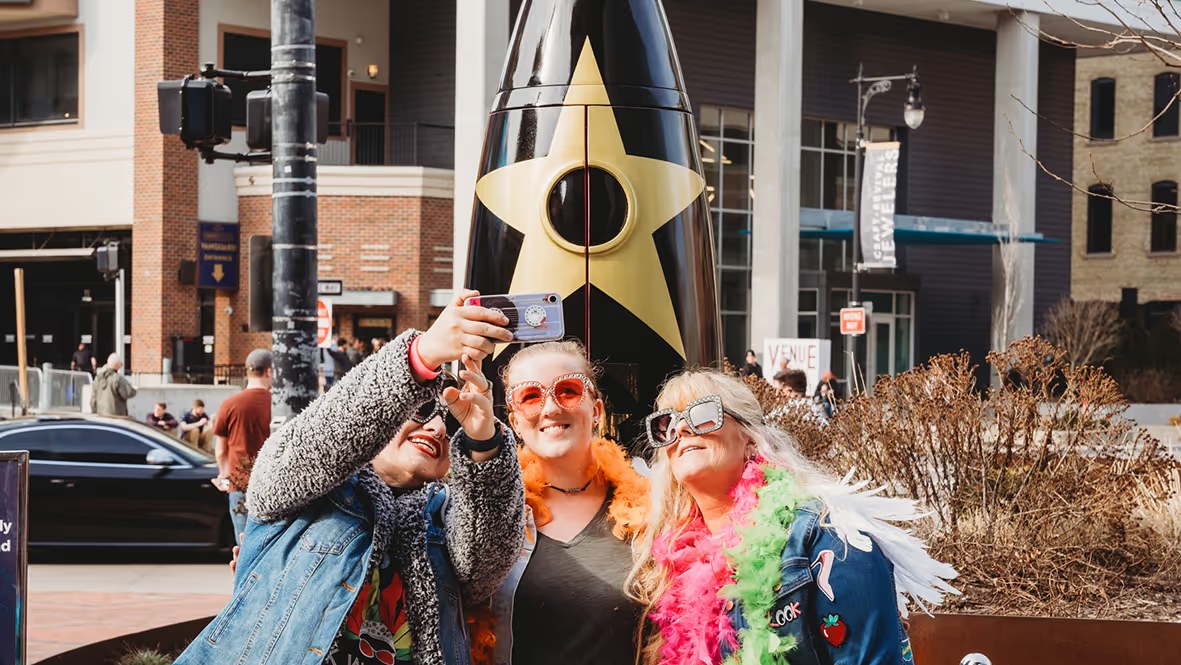
Celebrity endorsements have the most impact when fans can interact with the celebrity and the product in person. The Hot Topic x Xochitl Gomez activation, detailed in the case study below, shows how a live setting turns a celebrity announcement into a moment fans experience directly.
Measuring Celebrity Campaign Success
A celebrity endorsement can perform well on social media and still fail to move sales, so measurement needs to cover more than follower counts. A framework should track four categories: event attendance and participation, product sales during and after the appearance, engagement and share of voice across social platforms, and how long the conversation continues after the campaign ends. Live events make the first two easiest to measure directly, since attendance and on-site sales are countable. After a celebrity activation wraps, Activate reviews the metrics and delivers a recap covering what worked, what to adjust, and next steps for the campaigns that follow. For typical ranges across these metrics, see Activate's Experiential Marketing Benchmarks; for the full model, see ROI of Experiential Marketing.
Running Celebrity Campaigns Across Multiple Channels
A celebrity endorsement performs best distributed across multiple channels rather than confined to one. A typical rollout moves through:
- Social Media Integration: Coordinated posts across Instagram, TikTok, and X, adapted by platform. TikTok favors unscripted clips; Instagram favors a polished format, so campaigns rarely reuse one asset everywhere
- Live Event Activations: Mobile tours, pop-ups, and brand experiences where the celebrity interacts with fans in person
- Traditional Media: Press coverage and interviews that extend reach beyond social followers
- Influencer Marketing: Additional creators sharing celebrity content within their own networks
- Experiential Marketing: Events and installations that create moments distinct to the brand
Building Long-Term Celebrity Partnerships
A single celebrity endorsement rarely creates lasting impact. Stronger results come from partnerships that run across multiple campaigns, giving the brand and celebrity room to test formats and build on what worked before. David Beckham's long-running endorsement with Adidas and Taylor Swift's continued brand partnerships show what repeated collaboration can build over time. Brands that stay engaged with a celebrity's audience, rather than treating each post as a one-off, get more out of every campaign that follows.
Case Study: Hot Topic x Xochitl Gomez
When Hot Topic named actress Xochitl Gomez its Chief Style Officer and launched the Social Collision x Xochitl Gomez collection, Activate built the announcement into a live activation in Downtown Los Angeles rather than a press release alone. The format sits in Activate's VIP and influencer gathering category: an invite-only setting built to deepen relationships with high-value guests rather than draw the largest possible crowd.
Event Elements
- A star installation and step-and-repeat backdrop built for content creation
- A dressing room vignette for hands-on product interaction
- Airbrushed hoodie customization and temporary tattoo stations
- Themed mocktails, a Korean BBQ food truck, and a DJ set
The activation gave Gomez's new role and the collection a physical moment to anchor the announcement, generating attendee content that ran alongside her own posts and extended the campaign beyond the venue itself.
About Activate: Celebrity Endorsement Activation Specialists
Activate designs Mobile Tours, pop-up events, and PR campaigns that give celebrity partnerships a place to happen in person. Our in-house production team handles everything from activation environments to the PR boxes celebrities unbox on camera, so every stage of the campaign stays consistent with its message. From the Hot Topic x Xochitl Gomez launch to press mailer campaigns for brands like Ruggable and Nordstrom, our project history spans product launches, retail tie-ins, and press moments built around a name people already recognize.

Connect with our team to discuss your celebrity partnership strategy.
Frequently Asked Questions
What is celebrity endorsement marketing?
Celebrity endorsement marketing is a paid arrangement where a well-known celebrity endorser promotes a brand's products or services, typically through social media posts, appearances, or campaign features defined in a contract.
How do celebrities endorse brands?
Celebrities endorse brands through social media posts, traditional advertising, and live activations such as mobile tours, pop-up events, and product launches that create in-person moments between the celebrity, the brand, and fans.
What is an example of a celebrity endorsement?
Hot Topic's partnership with actress Xochitl Gomez, naming her Chief Style Officer and launching a co-branded collection through a live Los Angeles activation, is one example of a celebrity endorsement built around an in-person experience. The event paired a dressing room experience with photo moments, giving fans and press a reason to cover the launch beyond a single announcement post.
What are the FTC disclosure requirements for celebrity endorsements?
The FTC requires a visible disclosure, such as #ad or #sponsored, whenever a celebrity has a material connection to the brand they're promoting.
Should a brand choose a celebrity endorsement or an influencer partnership?
It depends on the goal. Celebrity endorsements suit broad awareness and credibility campaigns, while influencer partnerships typically reach a narrower, more engaged audience at a lower cost. Some campaigns combine both.
How do brands protect themselves from celebrity controversy?
Brands reduce exposure by monitoring their celebrity partners' public conduct, keeping a morality clause in every contract, and avoiding reliance on a single celebrity for a campaign.